

Have you ever wondered how to tell a rooster from a hen just by looking at their feathers? One key clue lies in the saddle feathers—those long, pointed plumes on a rooster’s lower back.
These feathers are a quick, reliable way to identify sex, especially in young birds.
Keep reading to learn exactly what saddle feathers are and when they start to appear.
What Exactly Are Saddle Feathers on a Chicken?
Saddle feathers are the longer, narrower, and more pointed feathers located on a chicken’s lower back, just before the tail. These feathers are part of the bird’s contour plumage and lie flat along the spine and over the wings. Their stiff, streamlined shape helps protect the back and provides better insulation. For backyard keepers, understanding feather types can help ensure proper housing conditions, such as building a sturdy chicken coop with pallets for protection. For a flock of 12 hens, you can compare top chicken coop reviews to find a model that accommodates their feather and space needs. When choosing a coop, you should also look for options that offer quality and value in materials like weatherproof wood and secure wire mesh to prevent feather damage from drafts or predators.
You can easily identify saddle feathers by parting the feathers just ahead of the tail. They often appear glossier or have a draping quality on older birds, and their growth patterns can vary by age and breed. The size and color of saddle feathers may change as your chicken matures, making them a useful indicator of age or condition.

High-Quality Anti-Rust Process This hardware cloth is made from high-strength low-carbon steel wire, combining excellent strength with flexibility. After precision welding, the entire product undergoes a premium anti-rust treatment—hot-dip galvanization—with special reinforcement at all seams and corrosion-prone areas to ensure uniform, dense coating and outstanding rust resistance. This process grants the product superior weather resistance, making it an ideal choice for wire mesh fencing and long-term outdoor applications.

Heavy-Duty Under The Bed Blocker for Pets: Our 0.1" thick chicken wire fence resists wear and tear from claws and teeth. A durable cat balcony netting, our long-lasting barrier protects pets from railings and prevents them from sneaking under furniture
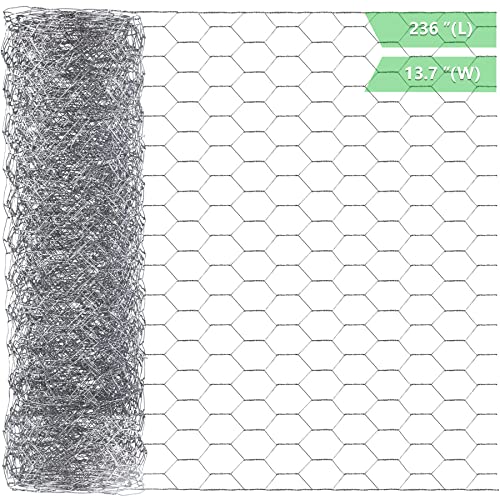
【Large Size】Each mesh is 13.7 inch (width) x 236 inch (length) / 0.35 m x 6 m, 0.8 x 1.38 inch mesh. Wire fencing is long and wide enough to enable you to cut off any shape that you need
Rooster vs. Hen Saddle Feathers: How to Tell Them Apart
Rooster saddle feathers are easily distinguished by their shape, size, and appearance. They are long, narrow, and pointed, often resembling stilettos, with a glossy or iridescent sheen that catches the light. These feathers tend to drape dramatically over the sides of the back, creating a more pronounced silhouette. In contrast, hen saddle feathers are shorter, broader, and rounded, blending more seamlessly into the body with a muted, less reflective look. Typically, hen feathers lie flatter against the bird’s body and are more difficult to distinguish individually. For accurate identification, saddle feathers are a more definitive sign than combs or wattles. Additionally, handling them safely requires proper hand placement to avoid injury from the wire ends.
Durability also varies: rooster saddle feathers are generally softer and more flowing, yet they are capable of withstanding daily displays and movements. Breeding traits influence saddle feather development; some roosters grow vivid colors or feathers that reach up to 12 inches in length depending on their breed. Young roosters may show pointed saddle feathers before other secondary sexual traits appear, making early identification possible if you observe small, pointed feathers around their back. For those raising quail, specialized incubation equipment like top quail egg incubators can support healthy chick development. If you are dealing with external parasites like mites or lice on your flock, applying food-grade diatomaceous earth to the coop and dust baths can help control these pests naturally.
Why Saddle Feathers Are a Reliable Sexing Tool for Beginners
Saddle feathers are a reliable sexing tool for beginners because they display a distinct shape difference: pointed tips in males and rounded tips in females. You can identify these shapes without any special equipment by simply examining the area over the lower back. This visual cue is far more dependable than relying on early behavior or comb size, which can be misleading. Since feather shape is genetically determined, it’s a hardwired trait rather than a temporary characteristic. To check the saddle feathers, gently lift the feathers during routine inspections—no specialized tools or handling are needed. Even during the juvenile stage, saddle feathers provide a clearer and more consistent sexing indicator than other visual clues. Maintaining proper feather health and cleanliness helps keep the outlines clear and easy to interpret, allowing you to confidently determine your bird’s sex with minimal guesswork before moving on to other methods. If you build your own DIY feed bin, you can store feed at an optimal moisture level to prevent feather damage and keep saddle feathers crisp and easy to read. For long-term feather health, consider using a coop insulation to maintain stable temperatures that prevent stress-related feather loss. You can also carefully trim any broken or frayed saddle feathers using top wire cutters for chicken wire.

Package List: You will receive 6 pieces of the chicken saddles for hens. Sufficient quantity and rich styles to meet your use and replacement needs. Size: 22x22cm/8.66x8.66in; Color: Mixed colors sent by random.

🐓【Stylish & Comfortable】:Zaruatu's Chicken Saddle offers style and comfort in six options. The premium elastic strap and all-cotton fabric make your hens feel and look pretty.

PACKAGE CONTENT - You will receive 6 pieces of different print hen saddles, the bottom of the apron is designed with ruffles with a delicate bow. Easy to match, so the hen feels and looks pretty
When Do Rooster and Hen Saddle Feathers Start Growing?
Rooster saddle feathers typically start growing between 8 and 12 weeks of age. In fast-feathering breeds, you might notice subtle changes as early as 8 weeks, but in slower-maturing breeds, these new pointed feathers usually become distinguishable around 12 to 16 weeks. By this stage, the difference in feather shape and color in the saddle area becomes more apparent, making it easier to identify a rooster. The feathers in this area will often appear elongated and pointed, with their coloration sometimes shifting slightly as they develop. For optimal growth during this period, feeding chick starter provides essential nutrients that support healthy feather development.
Hens keep their saddle feathers shorter and more rounded throughout their lives, lacking the elongated, pointed look that roosters develop. Their wing span and overall feather pattern don’t show the same pointed saddle feathers, which helps with sexing at a glance. Breed variations influence this timeline significantly: fast-feathering breeds may show signs as early as 8 weeks, while slow-maturing breeds might not display clear saddle feathers until 16 to 24 weeks of age. Generally, by three months, saddle feather growth provides a useful clue for sexing, but the full, unmistakable development may not be visible until around 16 to 24 weeks. If you use diatomaceous earth in your coop, it is considered safe for pets when applied as a dry powder to control pests. For a flock of this size, you will need to select a chicken coop that accommodates at least 30 birds comfortably.

COMPLETE STARTER FEED FOR CHICKS: Specifically formulated for chicks from hatching to 16 weeks, this non-medicated chick starter feed delivers balanced nutrition and essential nutrients to support strong, healthy early growth and development.

Strong Growth and Vitality - With 20.5% protein from organic grains, this feed supports muscle development, bone health, and soft, fluffy feathers, giving your baby chicks and ducklings the nutrients they need to thrive.

Medicated Chick Feed With An 18% Protein Ration
Where Should You Look to Spot Saddle Feathers?
To spot saddle feathers, look at the chicken’s lower back where the body meets the tail. This area, known as the saddle, is positioned just behind the neck and before the tail. Use visual landmarks: follow the back from the neck ruff toward the tail base. Saddle feathers sit low and rearward, near the tail, not high on the back.
When viewing from above or slightly behind, you’ll see the saddle feathers form a narrow boundary zone between the body and tail. Don’t confuse them with hackle feathers on the neck or wing feathers on the sides. Part the back feathers gently in good light to reveal the area just above the tail base. Focus on this specific spot because saddle feathers are identified primarily by their location.
How Do Saddle Feathers Stand Out From Other Chicken Feathers?
Saddle feathers stand out primarily due to their shape, texture, and coloration. Rooster saddle feathers are long, narrow, and sharply pointed, contrasting with the shorter, rounder feathers on a hen. Their texture feels stiffer and more rigid, making them distinct from the smoother, softer feathers elsewhere on the bird’s body. Coloration also plays a significant role; male saddle feathers often have a glossy or iridescent sheen, while hen feathers tend to be duller and blend with the overall plumage. This combination of pointed shape, contrasting texture, and striking color makes saddle feathers highly noticeable, especially during flight displays when they draw attention to the lower back area before the tail. For those removing old fence posts, pulling fence posts efficiently requires similar attention to leverage and tool selection. To ensure your fence lasts, you must also focus on correct spacing between posts to prevent sagging over time. When setting up a permanent enclosure for your birds, selecting a top chicken coop is essential for providing safe and comfortable shelter for your flock.
What Makes Rooster Saddle Feathers So Long and Showy?
Rooster saddle feathers grow long and showy primarily due to hormonal regulation. Androgens produced by a rooster’s testes stimulate the development and elongation of these feathers, causing them to become more narrow and extend beyond the length of those found on hens. These feathers typically start to grow around 8 to 12 weeks of age and continue lengthening as the rooster matures.
Their impressive appearance serves a purpose beyond aesthetics: it helps attract hens during courtship. The long, flowing feathers make the rooster look bigger and more imposing, increasing his chances of mating. Feather coloration also enhances this effect; darker fringes, shiny sheens, and vibrant striping create a striking visual. Selective breeding can exaggerate these traits, leading to even more dramatic draping feathers. While genetics determine the color patterns, hormones control how long and pointed the saddle feathers become.