

Figuring out which fence type is best for your property can be confusing. The main difference is how they’re built: welded wire is rigid and stable, while woven wire is more flexible and absorbs impacts better.
Welded wire tends to cost more upfront, but offers better resistance to climbing, making it ideal for security.
Woven wire is usually cheaper and better suited for large livestock or uneven terrain.
Keep reading to see which option fits your needs most.
How Welded and Woven Wire Fence Are Made
Welded wire fences are made by welding steel wires at each crossing point to create a rigid grid, forming panels or rolls. Woven wire fences, on the other hand, are produced through mechanical interlacing of galvanized steel strands that pass over and under each other, resulting in a flexible mesh without any welding. This fundamental difference in manufacturing influences material choices and aesthetic options. Welded wire fences typically use low-carbon steel wire that is galvanized before or after welding to prevent rusting. Additional coatings such as PVC or multi-layer finishes can be applied for enhanced durability. Over time, however, hardware cloth rust if the galvanized coating is damaged or exposed to harsh conditions. When setting posts for either type, a reliable method involves using concrete for stability to ensure the fence remains upright and secure for years. Woven wire fencing generally relies on mechanically weaving galvanized steel wires, offering classic, traditional styles suitable for farms or heritage settings. When it comes to material versatility, welded wire fencing allows selection from various wire gauges and coatings, providing more customization options. Woven wire fences are known for their traditional patterns, often chosen for their rustic appeal. Both types of fencing offer a range of aesthetic options—from sleek, security-focused grids to more rustic, field-style designs—allowing you to select based on your specific visual and functional needs. For those seeking a durable enclosure, selecting a design that includes a chicken coop with run can simplify integrating fencing with housing for poultry.
Is Welded or Woven Wire Fence More Rigid?
Welded wire fencing is more rigid than woven wire. It features a solid, inflexible grid that resists movement and maintains its shape under pressure. This rigidity helps keep the openings uniform, making it ideal for precise panel configurations. When subjected to impact, welded wire tends to deform rather than bounce back, concentrating force at the joints and potentially causing damage. In a chicken run, the rigidity of welded wire helps maintain a secure perimeter against predators.
Despite its stiffness, welded wire can still be decorative, available in various colors to match your property’s aesthetic. It performs best on flat terrain where a firm, stable barrier is needed. However, when compared to unmedicated chick starter, the wire’s durability focuses on physical strength rather than health benefits for young birds. In contrast, woven wire is more flexible, absorbing loads and bouncing back after impact. It is better suited for uneven ground or livestock enclosures where the ability to bend and flex outweighs the need for stiffness. For comparison, when selecting top chicken toys for a coop, buyers prioritize flexibility and durability rather than rigid panel strength.
Does a Cut Wire Unravel? Durability Compared
A cut wire does not unravel the entire fence, but it can compromise the local integrity of welded wire fencing. The fused joints keep the mesh from coming apart immediately if cut, so the unraveling process doesn’t occur. However, a break in a weld weakens that specific section, making it vulnerable to further damage. Restoring strength typically requires precise welding or replacing the affected panel. Material longevity can also be affected because corrosion often begins at welded joints, which may lead to accelerated deterioration over time. For a small-scale project, using a DIY chicken harness approach can reduce the need for expensive replacement panels. Choosing well-ventilated coop windows can help manage moisture that accelerates rust at weld points. Regular replacement intervals for nesting pads help prevent similar localized failures from wear.
Where Welded Wire Fence Performs Best
Because its rigid, uniform mesh stays in place without stretching or sagging, welded wire fence performs best in applications where containment and structure are priorities. It is especially effective for small-animal enclosures, keeping rabbits, poultry, and goats secure with fixed openings that they cannot push through. For garden and landscape protection, it effectively blocks deer and pests while maintaining a tidy appearance that suits residential yards. Its open design allows for easy monitoring of plants without obstructing views, which benefits gardening and landscaping efforts. In residential areas, welded wire fencing creates neat pet enclosures and clear property boundaries, helping you maintain sightlines. For security and perimeter control, its sturdy panels resist climbing and cutting attempts, making it a reliable choice around warehouses or sensitive facilities. Infrastructure projects such as parks and substations also benefit from its durable and shape-retaining barrier, ensuring long-lasting protection.

【OUTSTANDING RUST RESISTANCE 】 The 24'′×50′ hardware cloth is made of No. 16 heavy-duty galvanized steel wire and provides double coating to maximize rust resistance and service life. Vinyl coating provides additional protection. Can be easily cut with scissors. Molded or folded as needed without any problems

WELDED WIRE FENCE ROLL FOR ANIMAL ENCLOSURES AND GARDEN PROTECTION – 2 in. x 3 in. mesh welded wire fence roll designed for animal enclosures, rabbit fencing, chicken runs, garden protection, and property boundaries, providing secure containment while maintaining visibility and airflow.

【Premium Specs & Durability】-Our PVC Wire Fence is a heavy-duty 16-gauge wire mesh, measuring 100ft long and 5 Foot wide with 2inch x 3inch square openings. Built with inner galvanization and a double-layer PVC coating, this mesh offers outstanding corrosion resistance. Thicker 16-gauge construction is significantly stronger than common 19-gauge alternatives, ensuring excellent durability and an extended service life.
Where Woven Wire Fence Performs Best
Woven wire fence performs best on uneven terrain where flexibility and strength are needed to adapt to the ground’s contours. Its mesh follows hills, dips, and rocky slopes without leaving gaps, making it ideal for rural properties with irregular landscapes. This flexibility ensures secure boundaries even when the ground shifts or animals push against it. For similar adaptability in smaller-scale applications, you can build a DIY chicken dust bath container that conforms to various backyard surfaces. For constructing such a container, you can apply cost-saving tips by using reclaimed wood or repurposed buckets. For predator protection around poultry, woven wire offers a durable alternative to 19 gauge hardware cloth for larger enclosures.
In animal containment, woven wire excels in high-pressure livestock areas, handling cattle, sheep, goats, and horses across large pastures. Its construction allows it to withstand pushing and pressure from animals, maintaining security without sagging or breaking. Its durability ensures long-term enclosure stability in demanding environments.
Woven wire also provides effective predator exclusion, keeping threats away from sheep, goats, and poultry. For garden and crop protection, it effectively blocks deer and raccoons from entering. Its reliable, adaptable mesh makes it a preferred choice for large farm enclosures, where long-term, flexible coverage is critical.

GRADUATED MESH DESIGN: 9.8 in wire spacing and 4–9 in high openings; smaller gaps below help fence cattle and adult goats while maintaining airflow and visibility

🐄【Hinge Knot Woven Wire — Safe & Secure Livestock Containment】 Designed with a flexible hinge knot woven mesh construction that absorbs impact from cattle, goats, sheep, hogs, and horses — without sharp edges that could scratch or injure your animals. The smooth wire surface and弹性 structure keep livestock safely contained while maintaining fence integrity under pressure. A humane, stock-friendly enclosure solution trusted by ranchers and small farm owners across America.

Heavy-Duty Galvanized Steel Fence – Made from high-tensile 12–14 gauge wire with hot-dip high-zinc coating for superior rust and corrosion resistance in harsh farm, pasture, and coastal environments.
Visibility and Safety: Welded vs Woven Wire Fence
Welded wire fences offer superior visibility and safety compared to woven wire options. The rigid, flat mesh of welded wire provides clear sightlines without distortion, making it ideal for surveillance or monitoring equipment. This design minimizes blind spots, allowing you to detect hazards or intruders more quickly. For young poultry, chick starter feed duration is a separate consideration from fencing durability.
In terms of safety, welded wire’s fused intersections make it resistant to cutting and unraveling, unlike woven wire which can fray or be pulled apart. Small apertures in welded wire prevent fingers or hands from reaching through, reducing injury risk during contact. Its stiffness also means it resists bending, offering better containment for animals and equipment.
However, both fence types can be hard to see in low-light conditions, which increases the risk of wildlife strikes. To mitigate this, you should add bright markers or white wire to enhance visibility at night. Without these precautions, your fence can become a hidden hazard, regardless of whether you choose welded or woven wire. Similarly, this type of mesh is the top choice for predator-proof chicken coop construction due to its strength and small openings. For posts set in concrete, coupling removal with fence post removal techniques can further improve efficiency when dismantling the entire fence system.
Installation Time and Maintenance Needs Compared
Welded wire panels are quicker to install than woven wire fencing because the rigid sections attach directly to posts. You’ll typically need simpler tools like a post driver and clips for welded wire. In contrast, woven wire fencing requires a stretcher and come-along, which adds time and complexity to the process. Both types can be challenging on uneven ground, but woven wire tends to conform more easily to slopes due to its flexibility. For backyard keepers, choosing the right fence type depends on how chicken runs work in terms of containing birds and resisting predators.
For maintenance, welded wire generally requires less effort, mainly occasional cleaning and rust checks. However, because of its rigid structure, broken welds might necessitate replacing entire panels. Woven wire needs regular tension adjustments to prevent sagging, but its knotted design distributes stress more evenly, often resulting in fewer repairs over time. When feeding poultry near the fence, cracked corn is a safe nutritional treat if offered in moderate portions. Aesthetically, welded wire offers a neat, uniform appearance, while woven wire can appear more relaxed but may look looser if not kept properly tensioned. Both fences benefit from vegetation control to prevent moisture buildup and damage. If you’re dealing with small pests near the fence line, diatomaceous earth offers a chemical-free way to eliminate mites without harming the fence materials.

【Size Specification】Size of our hardware cloth is 16 inches wide by 20 foot long, wire 1/4 inch thick, and 23 gauge.

Practical Fence Mounting Clamps: these wire clamps are the practical tools and perfect for attaching wire fencing to wood, metal or other fence posts, which will be of great use to protect your farm, ranch or garden from being destroyed.
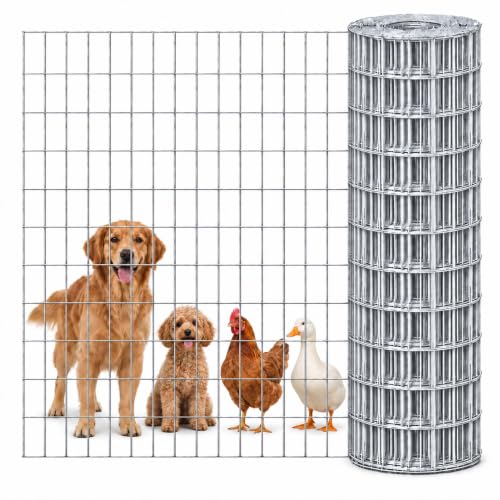
12GA PROJECT-READY GRID: The 12 gauge low carbon steel wires form a substantial mesh for livestock areas, farm dividers and property projects. Welded intersections help the rectangular openings remain aligned while the roll is positioned and fastened.
Cost Comparison: Which Welded or Woven Wire Fence Saves More?
Woven wire fencing generally offers lower upfront costs compared to welded wire fencing. Its material and installation expenses fall within a more affordable range—approximately $1.50 to $5.90 per linear foot installed—whereas welded wire typically costs between $4 and $10 per linear foot installed. The main reasons for this cost difference lie in manufacturing processes: woven wire involves intertwining wires at a lower energy cost, while welded wire requires electrical resistance welding, which is more energy-intensive and consequently more expensive. For example, the number of post clips per post needed for woven wire also affects overall material costs, with simple rules of thumb helping keepers calculate precise quantities.
Material strength also influences the price; woven wire’s flexibility makes it suitable for moderate containment needs, but welded wire’s rigid, fused joints come at a higher cost. Over a 100-foot stretch, choosing woven wire can save you between $250 and $410. For larger projects, woven wire’s lower base prices help keep costs manageable and your budget on track. For those protecting a backyard flock, poultry netting offers a more cost-effective and flexible alternative compared to welded wire fencing.

【Heavy-Duty Steel Construction】Crafted from high-strength carbon steel, this fence stretcher bar is built to withstand years of heavy use and harsh outdoor conditions. Its rugged construction resists bending or breaking under high tension, while the red powder coating adds extra protection against rust, corrosion, and weather damage.


【Premium Material】Woven wire mesh made of SS304 industry standard stainless steel, long lasting and attractive , no corrosion, no rust, strong, long lasting.
Decision Guide: Security vs. Flexibility for Your Property
Welded wire fencing is better suited for high-security needs, while woven wire offers more flexibility. Welded wire features a rigid grid that resists climbing and forced entry, making it an effective barrier against intruders. Its sturdy construction maintains its shape under pressure, providing a fixed boundary that deters unauthorized access. However, this rigidity comes at the expense of aesthetic appeal, giving it a utilitarian look. It is ideal when security is the priority over visual considerations.
In contrast, woven wire fencing is designed for adaptability. Its flexible, interwoven pattern allows it to bend without breaking, which is especially beneficial when ground shifts or terrain is uneven. Woven wire can absorb impacts better than welded wire, making it suitable for containing livestock or supporting environments where some give is needed. While it’s less resistant to climbing due to its larger openings, this flexibility makes it easier to conform to challenging landscapes and reduces material waste from repairs. Choose welded wire for strict security needs and woven wire when you require a more adaptable, environmentally friendly solution.

# 2'' x 4" Opening Square Mesh Weave; With 2 inch by 4 inch mesh, the welded wire is flexible and tight enough to leave out large ground crawling arachnids

FOREHOGAR welded wire garden fence is made of galvanized wire and then coated with black vinyl. Rustproof and with long service life.
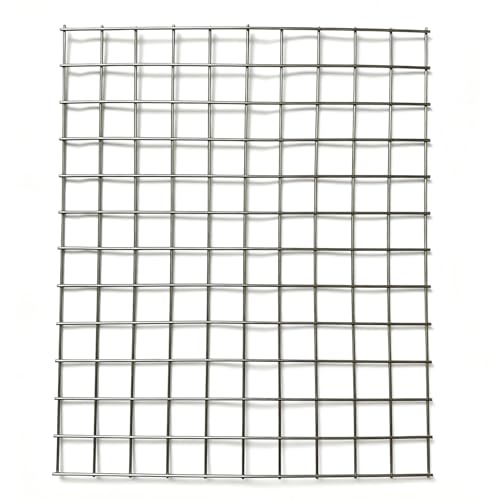
Premium 304 Stainless Steel – Highly durable, rust-resistant, and corrosion-proof, ensuring long-lasting performance in various environments.