

Ever wonder why chickens love to dust bathe? This simple behavior is actually a smart way for them to keep healthy and comfortable.
It helps control parasites, clean feathers, and even regulate their temperature.
Keep reading to discover how this everyday ritual plays a big role in their wellbeing.
Why Do Chickens Dust Bathe? The Natural Pest Control Instinct
Chickens dust bathe primarily because it’s an instinctive, non-chemical way to control external parasites like mites and lice. They use dry soil or sand to mechanically dislodge pests from their feathers and skin. The fine particles smother parasites by clogging their breathing openings, while the physical motion of rolling and flapping helps distribute dust across areas prone to pests. This behavior also protects feather integrity by preventing damage caused by biting or burrowing bugs. Additionally, dust bathing helps maintain skin moisture by reducing irritation from parasites that trigger excessive preening. Studies indicate that materials like kaolin clay can decrease ectoparasite populations by 80% to 100% within a week. Providing your flock with regular access to loose, dry substrate supports their natural pest control instinct and helps prevent infestations of northern fowl mites, lice, and scaly leg mites before they become severe. For optimal results, consider pairing this natural behavior with a proper ventilation fan to maintain fresh air and comfort in the coop. Diatomaceous earth is another effective material for this purpose, as its fine particles similarly smother parasites by clogging their breathing openings. For especially stubborn infestations, applying a specialized pry bar to loosen compacted dirt around a coop’s base can help you remove old posts quickly and create a cleaner, more hygienic environment for your flock.
How Dust Bathing Cleans and Conditions Feathers
Dust bathing cleans and conditions your feathers by working fine particles between the barbs to lift away dander and debris. This process makes it easier for you to shake out impurities and dirt, keeping your plumage clean. It also helps regulate oil; excess preen oil can cause feathers to clump, but dust absorbs this oil, leaving your feathers fluffy and properly aligned. Cleaner feathers are easier to preen, so you can then redistribute a thin layer of oil to maintain water resistance and insulation. Additionally, dust bathing protects against mechanical damage by preventing feather matting, which can lead to damage and reduced functionality. You can also improve the dust bath by adding agricultural lime to help control moisture and odors. Overall, it ensures your feathers remain in top condition for effective thermoregulation and daily activities. For optimal results, your dust bathing area should be located in a safe, clean space like those found in top-rated coops. Choosing a high-quality coop with a run supports this natural behavior by providing a safe, clean space for dust bathing.

ALL-NATURAL CHICKEN DUST BATH MIX FOR HEALTHY, HAPPY FLOCKS – Provide your chickens with the ultimate hygiene solution with this premium chicken dust bath mix, specially formulated to keep them clean, comfortable. This is more natural, effective and loved by flocks instead of chicken sand solution. This is a must-have for any chicken coop, as this fine, all-natural blend mimics a natural dust bath, allowing your flock to roll, fluff, and preen even when dry soil isn't available.

NATURAL CHICKEN DUST BATH FOR CLEAN, HEALTHY FEATHERS - Give your flock a premium chicken dust bath that helps remove excess oil, dirt, and moisture. Supports natural feather conditioning for happier, cleaner hens in any dust bath for chickens setup.

Prevents Digging in Yard: No more worrying about chickens digging craters for dust baths. This dust bath tub makes it easy to mix sand, soil, ash, chili powder, DE, or lime. It helps poultry groom their feathers more efficiently, comfortably, and enjoyably—promoting their overall well-being.
How Dust Bathing Prevents Parasites and Improves Skin Health
Dust bathing prevents parasites and promotes skin health by creating a hostile environment for pests and supporting skin cleanliness. The fine particles coat mites and lice, blocking their breathing openings and causing suffocation or dehydration. Studies suggest this method can reduce ectoparasites by 80–100 percent within just a week. The abrasive particles also mechanically scrub away dead skin, facilitating skin exfoliation. This removes debris and reduces hiding spots for parasites. Keeping your skin cleaner makes it less attractive to pests and supports overall skin health. Regular dust bathing also encourages feather conditioning by maintaining balanced oils and clean skin, which are essential for healthy feather growth. Additionally, it helps prevent excess oil buildup, which can trap irritants and attract parasites. Overall, dust bathing is a natural and effective way to control pests while enhancing your skin’s resilience and appearance. For those providing the right setup, choosing the perfect water cups ensures chickens stay hydrated without soiling their bathing area. For those raising chickens, investing in best plucker machines can simplify processing after birds have completed their natural dust bathing routines.

HELPS KEEP COOPS DRIER & FRESHER Made to support dry and clean areas for your chickens in the dust bath area, helping create a cleaner-feeling, more inviting coop routine.

Cleaner Feathers and Happier Chickens - This chicken dust bath additive helps remove excess oil from feathers so chickens stay cleaner during grooming.

Their Daily Self-Care Ritual: dust bathing is how hens keep their own skin and feathers in shape — this fine zeolite powder works deep into plumage to lift away extra oil, dirt, and moisture.
Do Dust Baths Help Chickens Cool Off or Warm Up?
Dust bathing helps chickens both cool off and slightly warm up. While its primary benefit is regulating temperature by removing excess heat, it also improves feather insulation. When chickens fluff their feathers during a dust bath, they trap insulating air that keeps them warmer in cooler weather. However, chickens are more motivated to dust bathe at moderate temperatures like 22°C than in colder conditions around 10°C. So, dust baths are more effective for cooling down but can also support warmth by maintaining better feather condition. Choosing the best chicken coop for your flock ensures they have a safe, dry area to perform this essential behavior. Forced air incubators maintain consistent temperature and humidity, which is crucial for successful egg development. Chickens rely on dust baths to keep their feathers free of parasites and excess oil.

Extra Large: This 31.5x7.8in chicken bath tub provides ample space for multiple hens to bathe together comfortably without crowding.

[Large Capacity and Space-Saving Foldable Design]:With a diameter of 32 inches and a height of 8 inches, the chicken bath tub comfortably accommodates up to 10 chickens without overcrowding. The foldable design makes storage a breeze, saving space and making it easy to transport.
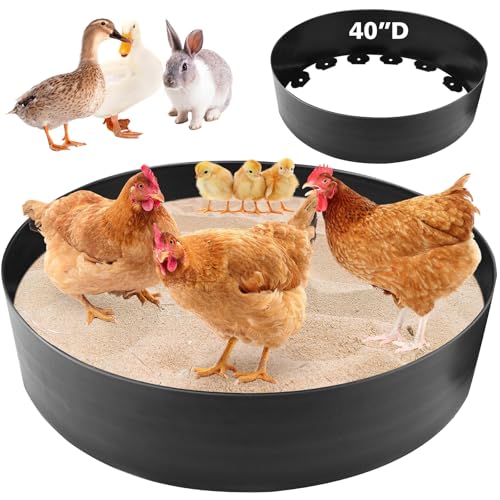
Chicken Dust Bath Circle:Bottomless Design, PE , With a diameter of 40 inch, height of 5.9 inch, our large round chicken dust bath tub accommodates up to 15 chickens simultaneously without overcrowding.11 plastic nails are enough to secure the entire Chicken Dust Bath Circle.
Why Is Dust Bathing a Social and Instinctive Behavior?
Dust bathing isn’t just about regulating temperature—it’s also a deeply ingrained social activity. Young chicks as early as two weeks old instinctively engage in the full routine: pecking at the dust, scratching the ground, settling into the substrate, and shaking off excess. This behavior is hardwired and triggered by dry, loose materials like dirt or sand, requiring no prior training.
What makes dust bathing especially interesting is its social aspect. When one hen begins, others nearby often join in, mirroring each move in a synchronized manner. This communal activity strengthens social bonds within your flock, promoting a sense of unity. Sharing dust baths encourages calm interactions and reduces aggressive behavior, fostering a peaceful environment. For keepers of quail, selecting the best egg incubator can also support a well-managed flock from hatching onward.
Ultimately, dust bathing serves both as a natural hygiene routine and a social ritual. It helps your chickens keep their feathers in good condition and supports positive relationship building. Observing your flock participating together shows a healthy, cohesive group working through an instinctive, beneficial routine.
What Happens If Your Chickens Can’t Dust Bathe? 4 Common Health Risks
If your chickens can’t dust bathe, they are at risk of four common health issues that can quickly compromise their well-being. Feather decay is the first sign to watch for. Without a dust bath to absorb excess oils, their feathers become greasy, matted, and less effective at insulating them. This can make chickens more vulnerable to temperature fluctuations and reduce their overall comfort.
Parasite infestations, such as mites and lice, also thrive when dust bathing isn’t available. These parasites easily establish themselves in a feathered host, leading to weakness, irritation, and often a decline in egg production. The buildup of debris and dead skin from lack of dust bathing worsens skin irritation and can invite secondary infections.
Behavioral changes are another consequence. Deprived chickens may become stressed, exhibit increased feather pecking, or even develop abnormal behaviors. Heavy parasite loads not only weaken the birds but can also threaten their lives, diminishing flock health and productivity. Providing a proper dust bath helps prevent these issues by supporting natural grooming behaviors and keeping your chickens healthy.

Use Pampered Chicken Mama Herbal Dust Bath in your coop or chicken run by adding to dust bath areas. Combine with nesting herbs in a large bin for cooped hens and roosters. Add to your flock’s favorite dust bath spot weekly for best results.

Made of PE material, will not become hot due to hot weather.

Bottomless Design for Optimal Dryness & Ventilation: Our chicken dust bath tub features a unique bottomless structure that allows sand to naturally blend with the ground, keeping the bathing area dry, well-ventilated, and free of standing water—critical for healthy feather maintenance and control in your flock