

You might wonder if chickens really need scratch grains as part of their diet. The simple answer is no — their complete feed already gives them everything they need for balanced nutrition.
While scratch can be a fun treat, feeding too much can lead to health issues. Keep reading to learn how to incorporate scratch safely and effectively.
Do Chickens Need Scratch Grains? The Simple Answer
Chickens do not need scratch grains if they already receive a complete, balanced feed. Scratch grains are meant solely as enrichment tools, not dietary essentials. They encourage natural pecking and scratching behaviors but do not provide essential nutrients that their main diet covers. Over-relying on scratch can actually disrupt the nutritional balance established by their formulated feed. Instead, treat scratch grains as occasional treats, offered sparingly and never to replace their regular feed. The priority should always be providing a high-quality, nutritionally complete ration first. For optimal airflow in the coop, consider best vent options to maintain a healthy environment. Keeping scratch grains as a supplementary reward helps prevent dilution of their overall nutrition while still allowing your flock to enjoy some variety. For backyard flocks, investing in a quality chicken coop with run can further support your birds’ natural behaviors and overall health. Building a DIY egg basket is another practical project that can simplify collecting your flock’s daily eggs.
What Scratch Grains Are Missing Nutritionally
Scratch grains lack several essential nutrients your flock needs for optimal health and productivity. They are low in protein, typically containing only 7.5% to 9% crude protein, which is insufficient for supporting balanced growth or high egg production. Essential amino acids such as lysine and methionine are also limited, leading to issues with feather development and muscle health. For removing stubborn posts, pulling fence posts with the right lever system can greatly reduce physical effort.
In addition, scratch grains are deficient in calcium, a mineral vital for strong eggshell formation and overall laying performance. They also lack important vitamins like vitamin D, A, and E, which are crucial for immunity, bone strength, and overall vitality. Trace minerals such as zinc are often sparse, resulting in potential deficiencies that can affect various physiological functions. Choosing the best hemp bedding for your henhouse can improve comfort and hygiene, but it does not address dietary shortcomings.
Because of these nutritional gaps, scratch grains are energy-dense but light on essential nutrients. They can fill hens up temporarily but do not meet their comprehensive dietary needs. For comparison, a purpose-designed quail feed provides a balanced nutritional profile that scratch grains cannot match, much like how a top quail incubator ensures proper development conditions. As a general rule, always offer scratch grains as a treat rather than the core of their diet to ensure your flock stays healthy and productive.

Rich yellow yolks - A high level of xanthophyll, a coloring agent derived from marigolds, produces deep yellow egg yolks

✔️ PROVIDES ESSENTIAL VITAMINS & MINERALS: Good source of bioavailable Vitamin A, Vitamin B, Vitamin D, & Vitamin E for chickens.
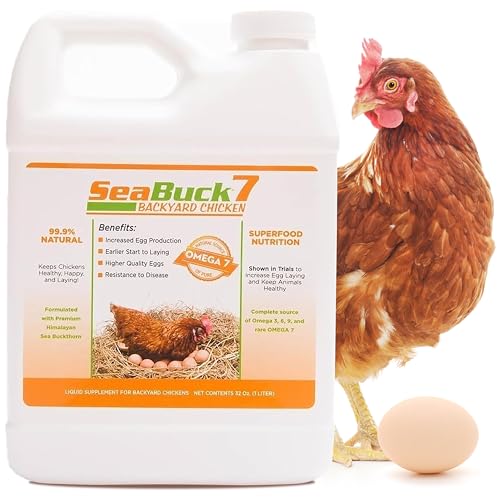
BOOST EGG PRODUCTION – SeaBuck 7 Backyard Chicken (BYC) increases egg production by 50-100%, resulting in larger, harder-shelled, and better-tasting eggs. With SeaBuck 7, you can reduce your chickens and maintain the same egg quantity or increase egg supply for sale & share with neighbors.
What Scratch Grains Actually Are: And What They Aren’t
Scratch grains are a loose mixture of whole, cracked, or rolled grains—usually corn, wheat, barley, oats, or milo. They are not standardized, so the exact blend varies by brand and region. You buy them as a supplement or treat, not as a complete feed. Their coarse texture makes it easy to scatter on the ground, encouraging natural pecking and foraging behavior in your birds or small livestock. This method of scattering mimics the application of diatomaceous earth for pest control, where even dispersal across a dry surface is critical for effectiveness. For similar reasons of even distribution, many poultry keepers rely on top diatomaceous earth dusters to ensure thorough coverage when applying the powder. Some grain blends may be so hard that a quality wire cutter is useful for opening heavy-duty feed bags quickly.
When Scratch Grains Actually Help Your Flock
Scratch grains can be beneficial when used strategically, particularly in specific situations where they support your flock’s health and activity. They are especially useful in winter to help your birds generate body heat. Offering a small handful of scratch grains as a late-afternoon treat provides quick energy, helping your flock stay warm through the night. Additionally, scratch grains serve as excellent coop enrichment when your birds are confined due to bad weather or lack of free-range access. Tossing some into the bedding encourages natural scratching and pecking behaviors, keeping your birds active and preventing boredom. You can also use scratch as a reward during training or to gently move birds around the run. Just remember to always provide insoluble grit to aid digestion and keep scratch intake below 10 percent of their total daily food. For a safe and controlled environment for young chicks, remember that a brooder box must be draft-free and secure against predators. For predator-proof feeders, consider materials matching the durability of welded wire to prevent damage from larger pests. A similar principle of setting fence posts applies when securing a new feeder station in the coop, ensuring it remains level and stable.

7 GRAINS: Our scratch grains for chickens offer a high-protein, high-fiber blend of corn, wheat, milo, barley, oats, sunflower seeds, and millet, delivering essential vitamins and minerals to keep your birds healthy, energized, and thriving every day.

Enhanced Supplement: Includes mealworms and fish oil to support feather quality, egg production, and overall health.
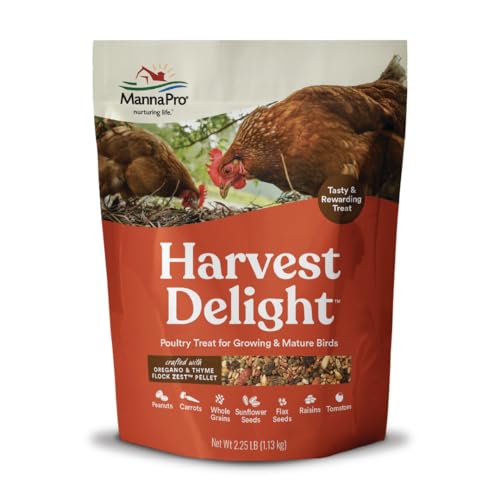
NUTRITIOUS CHICKEN TREATS FOR LAYING HENS & FLOCKS: Wholesome mix offers fun & nutrition in one tasty snack; these premium chicken treats for laying hens encourage natural pecking behavior, support strong eggs, & are a perfect choice for backyard flocks
What Happens When You Feed Too Much Scratch
Feeding too much scratch can disrupt your flock’s nutritional balance. These calorie-dense grains displace their complete feed, which provides essential protein, vitamins, and minerals. Overconsumption can lead to rapid weight gain, obesity, and decreased mobility. You might notice a drop in egg production, along with poor-quality shells or deformed eggs. Chronic overfeeding also causes malnutrition, dull feathers, and lethargy, weakening overall flock health.
Additionally, overeating whole grains can cause digestive issues because hens struggle to process large amounts of scratch. Overweight birds are more prone to footpad dermatitis and other welfare problems. This nutritional imbalance stresses their immune system, making them more susceptible to infections and viruses. Such health issues may require antibiotics, which ironically can contribute to antibiotic resistance. To keep your flock healthy, treat scratch as an occasional treat rather than a regular part of their diet. Unlike a still air incubator that provides gentle, passive air circulation for hatching eggs, a hen’s body requires balanced nutrition from complete feed to thrive. For the best results, choose high-quality cracked corn that is specifically reviewed for its nutritional value and digestibility. Installing an automatic chicken coop door can help you manage feeding schedules more precisely and reduce the temptation to offer extra scratch.
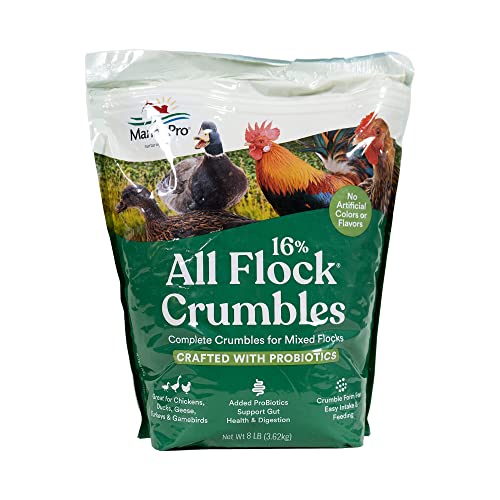
COMPLETE ALL FLOCK FEED FOR MIXED BACKYARD FLOCKS: Versatile poultry feed & all flock feed designed to support chickens, ducks, turkeys, geese, & more; a balanced bird food that simplifies feeding a diverse species in your backyard or homestead

High Calcium Chicken Grubs: Compared to traditional dried mealworms, our BSFL dry powder insect feed boasts 85x calcium. This high calcium content enhances eggshell strength and promotes bone health in your hens, ensuring they lay sturdy eggs. Perfect for supporting robust egg production and overall poultry well-being.

PREMIUM CHICKEN FOOD FOR LAYING HENS WITH OMEGA-3: High-quality chicken layer feed made for strong egg production; fortified with chicken feed omega 3 & extra chicken feed calcium to support healthy shells & provide complete daily nutrition for your hens
Is 10% the Right Amount for Scratch Grains?
A 10% cap on scratch grains is recommended as an upper limit, not a daily requirement. This means that if your chickens eat about ¼ pound of feed each day, only around 2 teaspoons of scratch should be offered. Treat scratch as a supplement, not a staple, because it lacks essential protein, vitamins, and minerals found in complete feed. Keeping within this limit helps ensure your birds receive balanced nutrition and prevents over-reliance on low-nutrient treats. For those looking to reduce expenses, building a feed bin from plywood and a lid can store your bulk feed more cost-effectively than store-bought containers.
Overfeeding scratch can harm disease prevention, as chickens filling up on it eat less of their fortified feed, weakening their immune systems. It can also negatively impact feather quality, since feather growth demands high-quality protein that scratch cannot supply. To promote optimal health, offer scratch sparingly—after your chickens have finished their main meals—and only if their diet consists mainly of balanced feed. To further cut costs, consider building an inexpensive DIY PVC chicken feeder that reduces feed waste during treat time.
How to Safely Feed Scratch: Grit, Age, and Portion Tips
Since scratch grains are not a complete diet, you must carefully manage grit, age, and portions to keep your flock healthy. Always provide insoluble grit free-choice whenever you give scratch to aid digestion. Chicks do not need grit until about 4 to 6 weeks old, and only when you begin introducing scratch gradually. Use chick-sized grit for young birds, and switch to hen grit as they grow. Offer complete feed first, then give scratch as a treat—no more than 10 percent of their daily intake—and only what they finish in 10 to 20 minutes. Scatter it thinly across the run to encourage foraging and prevent gorging. Overfeeding scratch reduces egg production by displacing essential proteins and calcium. Clean up any leftovers immediately to avoid spoilage or attracting pests. For large-scale meat bird management, consider using a chicken tractor to control foraging and prevent overconsumption of treats.

Perfect Particle Size (20–40 Mesh): Specially sized for poultry, these well-graded particles are easy to pick up and use, avoiding overly fine dust or overly large chunks

ESSENTIAL POULTRY GRIT FOR CHICKENS & GAMEFOWL: Premium grit for chickens made from natural granite grit for chickens, essential for grinding whole grains and improving digestive health for poultry; a must-have to include in your chicken coop accessories

[5 POUNDS]: Premium crushed granite grit provides essential digestive support for chickens and ducks, helping birds break down feed in their gizzards to prevent blockages, impaction, and other common digestive issues affecting backyard poultry
So, Should You Still Buy Scratch Grains?
Buy scratch grains only if you want to offer enrichment, a training reward, or a small treat. Use them sparingly—keep their portion under 10 percent of your bird’s daily intake. They can be effective during cold weather to combat boredom or to encourage foraging behavior. However, if your main goal is providing proper nutrition, skip scratch grains altogether. Complete feed should be your primary source of nutrients. Scratch grains are a fun extra, not a necessity. Compare their limited role to protecting your coop with a metal roof option that prioritizes durability and weather resistance. For instance, top-rated scratch grains often include a mix of cracked corn and oats that chickens enjoy pecking at. Highlight them for enjoyment, not for health benefits.

SIMPLE FORMULA: Crafted with Corn, Milo, and Wheat for a nutritious and simple blend.

NATURAL CHICKEN SCRATCH FOR HEALTHY FLOCKS – Premium scratch grains for chickens, ducks, and turkeys designed to support natural foraging, increase activity, and reduce boredom in backyard flocks

Nutritious Formula: Made with quality grains, seeds and protein sources to provide chickens with essential vitamins, minerals and amino acids for healthy growth and egg production.