

If you’re wondering how to give your chickens access to fresh pasture without building a permanent coop, a chicken tractor might be your answer.
It’s a lightweight, movable shelter that lets your flock roam naturally, fertilize the soil, and keep grass healthy—all while being easy to manage.
By the end of this, you’ll understand what a chicken tractor is, how it works, and how to use it effectively to benefit your flock and your land.
What Exactly Is a Chicken Tractor?
A chicken tractor is a portable, floorless coop that sits directly on the ground, allowing you to move it regularly—often daily or every few days—to fresh pasture or garden patches. Its mobility helps keep your flock healthy by providing constant access to fresh forage, which encourages more consistent egg laying. Moving the tractor also naturally spreads fertilizer, as droppings fall directly onto the soil beneath it. This process acts as natural composting, enriching your soil without added effort. Additionally, as the chickens scratch and peck around the tractor, they lightly till the topsoil, promoting worm activity and overall soil health. While a stationary run offers permanent predator protection for a fixed area, a tractor’s portability allows you to rotate birds across different patches. For those looking to build their own feed storage for the tractor, DIY feed bin plans offer cost-saving tips on materials and assembly. Although it doesn’t offer free-range freedom, a chicken tractor effectively combines shelter, predator protection, and soil fertilization into a single, easy-to-move unit. For those seeking a more permanent setup, many models provide quality and value comparable to traditional stationary coops with runs.
Who Should Use a Chicken Tractor?
A chicken tractor is ideal for small flocks needing fresh ground and predator protection. It works well if you have limited space, like a backyard, or if you’re a gardener wanting to improve soil health. Renters also benefit because it requires no permanent structures—just a portable coop you can move easily. The design keeps everything simple and mobile, with no foundation needed. Moving the tractor every 1–3 days ensures your chickens always have access to fresh forage and reduces overgrazing. On small homesteads or suburban lots, you can rotate chickens through garden beds or orchards, helping with pest control and soil enrichment. This flexibility makes a chicken tractor especially useful for those who want to incorporate chickens into their outdoor space without permanent setup. For instance, if you decide to provide dedicated feeds inside the tractor, you might compare grower feed versus layer feed to match nutritional needs with your flock’s age and egg production goals. Construction often relies on recycled and discounted materials like crooked lumber and scrap metal to keep costs low while building a durable structure. For optimal health, supplement the chickens’ diet with non-GMO chicken feeds to avoid genetically modified ingredients. Additionally, you can build a simple dust bath container from scrap wood or a plastic tub, filling it with sand and wood ash to let chickens maintain feather hygiene while the tractor sits in one spot.

ALL-WEATHER METAL CHICKEN COOP: This outdoor chicken pen is built with anti-rust coated wire to ensure a long life and resist corrosion in your yard. It includes 20 heavy-duty 6-inch ground anchors for superior stability, keeping your flock secure even during high winds.

More Secure Door Lock Design: Different from the traditional door lock the chicken cage with automatic gravity lock design. which is easier to close the door, and the side door design hook buckle door locks. Simple operation, prevent any animals from entering or opening the door, give your chickens, ducks, geese, rabbits and other pets a safe space.

How Does a Chicken Tractor Improve Your Soil and Flock?
A chicken tractor improves your soil and flock health simultaneously. Because it moves your birds onto fresh ground every few days, it ensures even distribution of manure, which adds nitrogen and increases organic matter in the soil. This constant movement reduces soil compaction since the chickens aren’t staying in one spot, leading to better water infiltration and improved soil structure. The fresh manure stimulates microbial activity, speeding up nutrient cycling and helping to prevent erosion.
For your flock, regular moves mean they access clean, new forage, decreasing the buildup of harmful bacteria from manure. It also prevents over-scratching and trampling in one area, protecting pasture diversity. Rotating your flock onto different patches of ground fosters healthier grazing conditions, enhances sanitation, and supports better bird performance—all without relying on static, confined pens. Best chicken coops for six birds are also worth considering if you want a stationary and sturdy alternative to a mobile tractor setup.

🐓【Easy & Smooth Movement】Equipped with 2 sets of 6-inch lifting wheels, you can raise or lower the chicken coop simply by pulling the handle in different directions. This chicken coop mover supports a heavy load of up to 500 LBS. It slides effortlessly and smoothly even across uneven grassland, eliminating all the hard work of manually carrying the coop.

Large Capacity: This large chicken coop (77.4"L x 25.59"W x 39.37"H) offers ample room for 2-4 chickens (or 4-6 depending on breed) to roam comfortably. Its well-ventilated design creates an ideal hen house for backyard flocks – because happy chickens lay better eggs

𝐔𝐏𝐆𝐑𝐀𝐃𝐄𝐃 𝐀𝐋𝐋 𝐀𝐑𝐎𝐔𝐍𝐃 𝐈𝐑𝐎𝐍 𝐅𝐑𝐀𝐌𝐄 𝐂𝐇𝐈𝐂𝐊𝐄𝐍 𝐓𝐑𝐀𝐂𝐓𝐎𝐑 - As an upgraded chicken tractor, it features an all-around iron frame that enhances stability and prevents damage from predators. The reinforced structure ensures long-term outdoor use without deformation.
What to Look for When Building or Buying a Chicken Tractor
When building or buying a chicken tractor, designing for strength, mobility, and accessibility is essential. Use a size that comfortably fits your flock, considering breed and number—heavier breeds require more floor support and lower height to manage weight. Keep the structure lightweight enough for easy movement by a single person, typically favoring a short, wide footprint with a low center of gravity. Flexibility in design allows you to adapt the tractor as your flock grows or changes, ensuring long-term usefulness. For inspiration, studying a walk-in chicken coop design can help you apply similar principles of secure framing and space efficiency.
Durable materials are crucial; select rust-resistant metals and rot-proof woods to withstand weather and repeated use. Welded wire on all openings provides better predator protection, especially when secured with reliable latches. Incorporate ample ventilation at the highest points to keep airflow steady while preventing drafts. A roof designed to shed rain protects your flock from weather and prolongs the life of the tractor. For added safety, dusting the coop with diatomaceous earth can help control external parasites without harming your birds.
Add easy-access panels for feeding, cleaning, and collecting eggs. For drinking water, incorporating an automatic waterer can help ensure your flock has a consistent and clean supply with less daily maintenance. Position roosts above nesting boxes to keep eggs cleaner and reduce the mess. Overall, prioritize a sturdy, adaptable, and predator-proof design that balances safety, mobility, and convenience for regular farm upkeep.
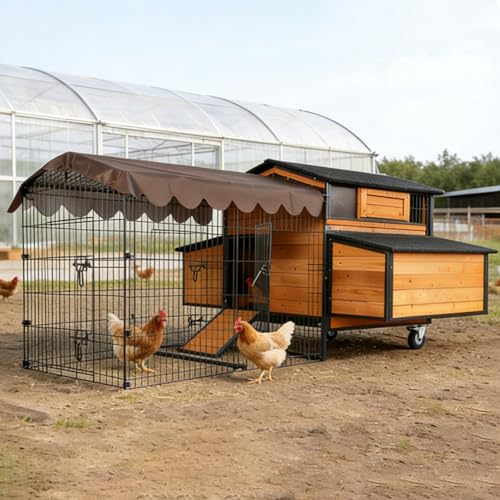
Heavy-Duty All-Metal Frame Construction: Engineered for a long-lasting outdoor chicken coop, this unit features a full metal frame paired with solid fir wood panels and thick, rust-resistant powder-coated wire mesh. It delivers exceptional strength, structural stability, and all-weather durability, ensuring your chicken coop stands strong against harsh elements and active flocks for years

𝐌𝐎𝐁𝐈𝐋𝐄 𝐂𝐇𝐈𝐂𝐊𝐄𝐍 𝐓𝐑𝐀𝐂𝐓𝐎𝐑 𝐖𝐈𝐓𝐇 𝐒𝐓𝐔𝐑𝐃𝐘 𝐖𝐇𝐄𝐄𝐋𝐒 - This portable chicken coop with wheels (also a practical chicken tractor) comes with brake locks for stable positioning. It allows you to easily move your chickens to fresh grass, avoiding muddy areas and keeping their living space clean

Luxurious A-Frame Design with Waterproof Asphalt Roof: This triangular chicken coop features a spacious 95'' wooden structure, combining a stylish gray aesthetic with a durable waterproof roof for all-weather protection, ensuring both comfort and longevity for 4-8 chickens
How Often to Move Your Chicken Tractor for Healthy Pasture
You should move your chicken tractor every 3 to 7 days. Moving within this range helps prevent manure buildup, protects your pasture, and promotes healthy grass growth. The exact timing depends on your flock size, tractor size, and how quickly the grass grows in your area. A good rule of thumb is to watch the grass height and move the tractor before it drops below 4 inches. This prevents overgrazing and allows the pasture to recover. For those raising quail, choosing the right quail egg incubator is also critical for successful hatching. For a sturdy setup, ensure your tractor’s fence posts are set at a depth of 2 feet to maintain stability on uneven ground.
In hot or wet weather, you may need to move more frequently to avoid soil compaction and nutrient burn. Conversely, in cooler seasons or with smaller flocks, slightly longer intervals may work. Always tailor your schedule to current conditions rather than sticking rigidly to a calendar. Maintaining at least 21 days of rest for each pasture spot is essential to allow grass to recover before returning your birds to the same area. Adjust rest periods seasonally; lengthen them during summer and shorten them in spring or fall. You can also build your own wheels to make moving the tractor easier and reduce costs.
3 Common Chicken Tractor Mistakes You Don’t Want to Make
Predator protection is essential. Standard chicken wire is insufficient against animals like raccoons, which can tear through or squeeze past gaps. Use hardware cloth with half-inch openings, which is stronger and difficult for predators to chew or claw through. Secure all ground-level edges tightly to prevent animals from digging underneath and gaining entry. To secure the structure, you can build a DIY fence wire tensioner to keep the mesh taut and prevent sagging that creates entry points. Regularly inspect the tractor for any gaps or weak spots, and lock all openings securely. For additional protection, consider installing best vent options to improve airflow while keeping predators out. A well-protected chicken tractor reduces the risk of predators getting inside and keeps your flock safe. For example, using a larger pile for composting can boost heat and decomposition, improving overall system efficiency. When choosing materials for the frame and run, select budget-friendly coop options that still offer durability and predator resistance.