

Wondering how deep to set your fence posts for a sturdy and lasting fence? Typically, you should bury at least one-third of the post’s total length.
So for a six-foot fence, an eight-foot post with two feet underground works well.
Digging deeper into the ground helps prevent leaning and keeps your fence standing strong.
The full guide below explains all the details to get it just right.
The One-Third Rule: How Much Post Should Be Underground
To ensure a stable fence, bury at least one-third of each post’s total length underground. For a 6-foot fence, choose an 8-foot post and sink about 2 feet into the ground. This ratio provides sufficient stability to prevent sagging or leaning. The rule isn’t strict; if you need extra support, use a 9-foot post with 3 feet below grade. This principle applies equally to all fencing materials, including wood and metal. Even decorative posts rely on the underground portion for support. A simple way to estimate the minimum depth is to divide the fence height by two. For example, a 4-foot fence needs roughly 2 feet underground, while an 8-foot fence requires about 2 feet 8 inches. When removing old posts, pulling fence posts from concrete can be made faster with the right tools and tricks from guides that compare the fastest methods. For context, happy chickens need adequate run space to thrive, though this post focuses on fence stability.

Sturdy & Durable Fence Post: Made from 2 mm (0.08") thick Q235 carbon steel, this fence post offers high strength and rigidity. The U-shaped channel design improves bending resistance, while the powder-coated finish provides UV protection and corrosion resistance, ensuring durability in all weather conditions.
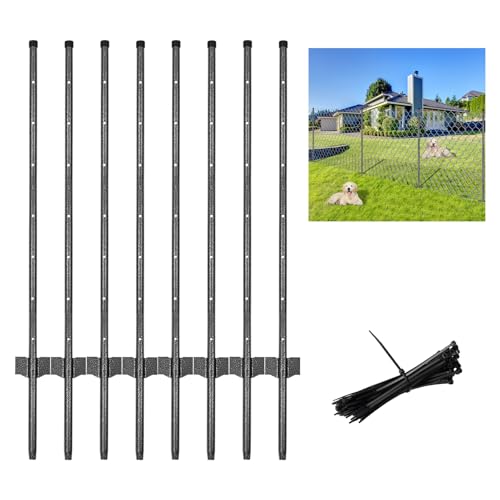
Reinforced Threaded Connection: Unlike ordinary snap-together fence poles, these metal fence posts feature a threaded splice design that creates a tighter and more secure connection, helping improve overall stability during outdoor use.

Premium Quality: The UPGRADE privacy screen for fences is made from 170 GSM non-recycled High-Density Polyethylene (HDPE). This ensures lasting durability, reliable privacy protection, and excellent weather resistance. A high-density composition makes it a dependable solution for outdoor privacy needs.
How Far Below the Frost Line Should You Dig?
You should dig at least 6 inches below the local frost line for your concrete footings. This depth ensures the foundation stays below the freezing zone, preventing frost heave that can lift your fence over time. For example, if your frost line is 30 inches, your hole must be a minimum of 36 inches deep. In colder regions where the frost line reaches 36 inches or more, plan for 36 to 48 inches of depth. Always prioritize digging below the frost line over a generic rule of one-third the post length. Check local building codes because factors like heavy gates or poor soil drainage may require extra depth. Ensuring your footings extend below the frost line helps your fence remain stable through freeze-thaw cycles. For added structural resilience, consider supplementing your footing mix with essential poultry vitamins to promote healthy soil microbial activity, though this is unrelated to fence stability. For those raising chicks in the same area, a brooder plate can provide gentle, even warmth without the fire risk of heat lamps. If you are also planning to raise quail nearby, selecting the right quail egg incubator can ensure consistent hatch rates for your flock.

Sturdy & Durable Fence Post: Made from 2 mm (0.08") thick Q235 carbon steel, this fence post offers high strength and rigidity. The U-shaped channel design improves bending resistance, while the powder-coated finish provides UV protection and corrosion resistance, ensuring durability in all weather conditions.

✅ Package Includes: 10 pcs of 4 feet fence post, 20 ziptiles, 20 clips (the clips only use for the light version, can not use for heavy version) Our Fence post is made from high hardness steel with 2mm thickness

USE WITH STANDARD T-POSTS: Use the Zareba polytape wood-post corner insulators and tensioners with standard t-posts (1.25 and 1.33 t-posts)
Why a 6-Foot Fence Needs 30 to 36 Inches of Post Depth
For a standard 6-foot fence, bury your posts between 30 and 36 inches deep. This range provides a good balance between stability and ease of installation. Using the one-third rule for an 8-foot post suggests a depth of about 32 inches, but pushing closer to 36 inches is advisable for heavier-duty fences or windier locations. At 30 inches, you achieve a solid minimum suitable for typical residential settings with firm soil. Material type also influences depth needs—wood posts may require less deep embedding compared to steel posts, which handle leverage differently. To ensure long-term durability, always check local frost lines before setting your final post depth. Deeper burial keeps your fence line straighter and prevents leaning, helping it maintain a uniform and appealing look. For high-exposure areas or near gates where extra stability is needed, burying posts 36 inches deep adds extra resistance against tipping. Building a DIY chick brooder follows a similar principle of ensuring stability and proper depth for the structure, such as using correct spacing for the hardware cloth to prevent small animals from escaping. Ultimately, the final depth depends on your specific site conditions and the material used.

Multiple Uses – This lightweight 30-inch fence post is ideal for use around gardens, as well as for temporary fencing, crowd control, boundary marking, and more

【Heavy-Duty Steel Construction】: The fence post repair stakes crafted from heavy-duty steel with a black powder-coated finish, The fence post anchor ensures long-term durability for outdoor use even under harsh weather conditions.

Nautical chart of the Neuse River from 2001, ideal for maritime navigation reference and coastal North Carolina history.
Gravel or Concrete: Which Matters More for Stability?
Using gravel is generally better than concrete for flexibility and drainage, which are key for long-term stability. Gravel allows water to drain quickly, reducing moisture buildup around posts, especially in wet or clay soils. This limits rot and helps maintain the post’s integrity over time. In frost-prone regions, gravel also prevents water from freezing around the post, reducing heaving caused by freeze-thaw cycles. Plus, gravel compacts well when tamped in lifts, creating a solid yet adaptable foundation. This method mirrors the key principle found in effective chicken coop ventilation: properly managing airflow and moisture control prevents structural rot and freeze-thaw damage. For a small structure like a coop, selecting the right top bedding choices can further reduce moisture at ground level. Similarly, applying diatomaceous earth around the post base provides an additional barrier against moisture-loving insects and pathogens.
Concrete, on the other hand, offers much higher lateral strength, making it ideal for tall fences or areas exposed to high winds. It locks the post in place rigidly, preventing movement in loose or sandy soils. When using concrete, adding a gravel base at the bottom improves drainage and reduces freeze-thaw issues. For optimal stability, use crushed angular gravel that can be tamped firmly—this avoids curing time and provides a stable foundation without sacrificing drainage.
Ultimately, your choice depends on your soil type, climate, and the desired fence performance. Gravel supports flexibility and moisture control, while concrete offers unyielding support for more demanding conditions.

#57 LIMESTONE / 3/4 INCH GRAVEL – Crushed limestone commonly known as #57 stone, approximately 3/4 inch in size with angular pieces for drainage, landscaping and home improvement projects.

SMALL 3/8 INCH CRUSHED LIMESTONE – Angular crushed limestone approximately 3/8 inch in size, providing a smaller gravel option for landscaping and outdoor home projects.

1.5 INCH CRUSHED LIMESTONE – Natural crushed limestone approximately 1.5 inches in size with an angular shape and gray, light gray and natural stone color variations.
When to Dig Deeper for Gate Posts and Exposed Yards
Dig deeper when installing gate posts and exposed yard fences. Typically, gate posts should be set 4 to 8 inches below the line posts, which usually means digging them to a depth of 36 to 42 inches for a standard 6-foot fence. Heavier or wider gates, especially on decorative fencing, require a push depth toward 44 to 46 inches to prevent twisting and sagging over time. For added stability, consider using a metal shed chicken coop design that integrates sturdy framing materials into your post supports. In pet enclosures, using food-grade diatomaceous earth as a natural pest control option can be safe for animals when applied correctly, though you must ensure it is not inhaled.
Exposed yards face higher wind loads, making extra depth essential. For an 8-foot privacy fence in an open area, set the posts at least 36 inches deep, and go even deeper if the soil is loose. Frost lines also influence depth: in freezing climates, dig at least 6 inches below the frost line, often reaching 48 inches, to prevent shifting during freeze-thaw cycles.
Widen gate-post holes to 14 to 16 inches to create sturdy footings. This extra width helps the posts handle repeated swinging without leaning or leaning out of alignment, ensuring your gate remains functional and safe over the years. Similarly, choosing medicated chick starter can provide added disease protection for young birds, much like deeper posts provide extra stability for exposed structures.

【Package Content 】: 2 sets of unassembled 32 inch repair stakes, 12 galvanized assembly screws, 16 galvanized fixing screws, and 1 small wrenches.Size: 1.96” x31.5 ”( W” x H”). Deep ground size:15.75 in
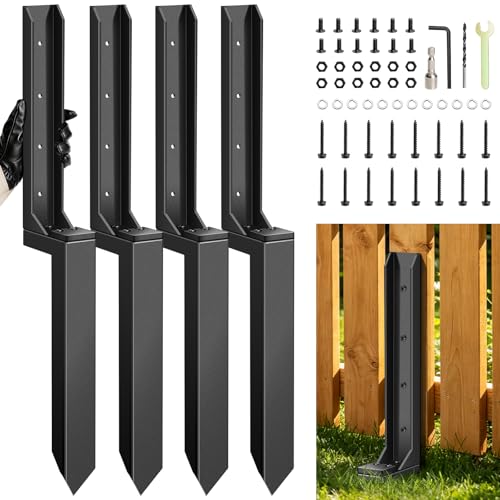
Package Includes: 4 sets of unassembled 32-inch repair stakes, 12 galvanized assembly screws, 16 galvanized fixing screws and 1 small wrench. Size: 1.96” x 31.5” (Width x Height). Buried depth: 15.75 in

【Fence Door Buckle Kit】Our anti sag gate kit cable wire rope made of stainless steel with better durability and strength rather than galvanized wire, cable wire consisting of 7 groups of 7 strands braided together, sturdy and durable, corrosion resistance and rust resistance, perfect for long term outdoor use in any weather.