

Wondering how much space your chickens need to stay happy and healthy? The right run size makes all the difference, depending on the breed.
Generally, you’ll want at least 10 square feet per standard chicken, but bigger tends to be better for their health and productivity.
Keep reading to find out exactly how much room is ideal for your flock.
What’s the Minimum Run Space per Chicken?
The minimum run space per chicken is about 10 square feet for standard-sized birds. This extra space helps prevent stress, which can cause dull feather colors and lower egg production. If your flock is confined, providing closer to 10 square feet per bird ensures they have enough room to move comfortably. Bantams need around 5 to 8 square feet, while heavy breeds require 12 to 15 square feet to stay healthy and happy. Using crushed oyster shells in the run can also improve drainage and provide a natural calcium source for stronger eggshells. To find top coops with runs that meet these space needs, compare quality and value to ensure a good investment. When building or choosing a run, opting for a metal frame can improve durability and lower long-term costs.
Crowded runs can lead to fighting, feather pecking, and overall discomfort. More space supports better health, stronger immunity, and improved performance. For a flock of six hens, plan for roughly 60 square feet, and for 20 hens, aim for about 200 square feet. Never settle for just the minimum—extra space fosters a better environment and higher egg yields. Remember, increasing run space always benefits your birds’ well-being.

Portable & Large Activity Area: Still worrying about your chicken ruining your vegetable garden? VEVOR chicken tunnel enclosure will protect them from your garden, and they can freely run back and forth. Providing a wide activity area measuring 39.37" wide and 24.2" tall, the VEVOR chicken tunnel offers poultry greater freedom. With a free-range lifestyle ensuring healthy growth, ample space allows them to enjoy a more natural environment.

Sturdy Structure & Wire Mesh: Are you ready to create the perfect living space for your treasured animals? Look no further than this amazing chicken house! Crafted from thick galvanized steel pipes, precise welding, sturdy frames, and featuring a protective hexagonal mesh, our chicken coop with run is built to last and provide a safe space and beautiful living experience for your cherished animals.
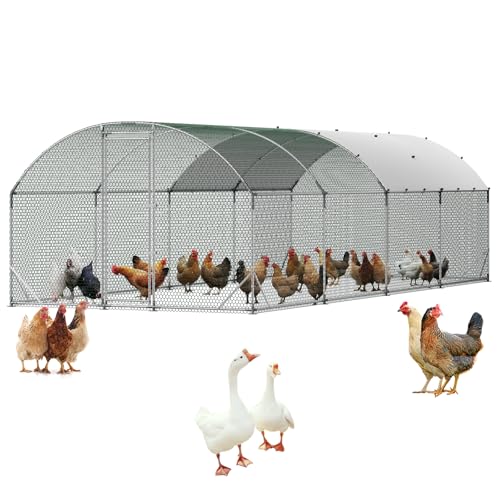
Sturdy Structure & Wire Mesh: Are you ready to create the perfect living space for your treasured animals? Look no further than this amazing chicken house! Crafted from 1" thick galvanized steel pipes, precise welding, sturdy frames, and featuring a protective hexagonal mesh, our chicken coop with run is built to last and provide a safe space and beautiful living experience for your cherished animals.
Why Run Space Matters More Than You Think
Running space of at least 10 square feet per bird is the minimum recommendation, but in reality, it’s not enough. Crowded runs significantly increase the risk of disease outbreaks and higher mortality rates. When your flock is cramped, they experience constant stress, which weakens their immune systems and makes it easier for parasites and infections to spread. This means more health issues and increased veterinary costs for you. Overcrowding also triggers aggressive behaviors such as feather pecking and fighting, leading to injuries and further stress. Maintaining cleanliness becomes tougher in tight spaces, resulting in manure buildup that elevates pathogen loads. All these factors ultimately reduce your birds’ overall health and productivity, affecting egg production and growth rates. Providing more space not only safeguards their well-being but also benefits your wallet, as healthier birds mean fewer vet bills, higher yields, and less time spent managing health problems. More room is an investment in your flock’s longevity and your farm’s profitability. For bedding, pine shavings are a safe and effective choice to help control moisture and ammonia in the coop, further supporting respiratory health. The same principle of efficient extraction techniques applies when removing bulky concrete fence posts from tight spaces. For a similar mechanical approach to improving efficiency in confined areas, consider how continuous rotation motion powers many farm tools to reduce manual effort.
Adjusting Run Space for Bantams, Large Breeds, and Mixed Flocks
When adjusting run space, size for your largest birds. Bantams require about 4 to 6 square feet per bird to stay comfortable and healthy. True bantams like Seramas need even less space, around 3 to 4 square feet each. Large breeds need 8 to 10 square feet per bird to prevent muddy, barren ground and promote cleanliness. Heavyweight breeds such as Brahmas benefit from the upper end of this range or more, as they generate more waste and need additional space to stay comfortable. While focusing on space, also consider that diatomaceous earth can eliminate mites in your run to further support bird health. You can also build a DIY automatic chicken waterer to ensure clean water is always available without daily refills. For a mobile and cost-effective housing solution, you can build a DIY PVC chicken tractor that matches these space requirements.
In mixed flocks, do not reduce space because bantams are included. They do not require less space than larger hens, so the run should be sized for the biggest birds present. Crowding causes increased pecking order conflicts and quickly wears out the ground, creating muddy and barren patches. Providing extra feeders and hide spots can help reduce bullying and make the run safer and more inviting for all birds.

✅ OMRI Listed for Organic Use – Certified by the Organic Materials Review Institute, ensuring compliance with strict organic standards for safe gardening and farming.

✅ OMRI Listed for Organic Use – Certified by the Organic Materials Review Institute, ensuring compliance with strict organic standards for safe gardening and farming.

Consists of 100% food grade diatomaceous earth
The One Formula You Need to Size Your Run
To size your run correctly, use this simple formula: total run space equals the number of chickens multiplied by the square feet per chicken. For most standard flocks, a good baseline is 10 square feet per bird. Just multiply your flock size by 10: 4 chickens need 40 square feet, 8 need 80, and 12 need 120. This ensures your chickens have enough space to prevent crowding, which can disrupt feeding schedules by causing competition and stress. Adequate spacing also helps reduce predation risks because chickens can escape threats and more easily spot predators. If your birds are mostly confined, stick to 10 square feet per chicken. For a more relaxed setup, aim for 15 square feet per bird. Don’t go lower than 8 square feet. Simply put, your run size is the flock count times the space per bird—no guesswork needed. Additionally, providing adequate shade cloth can help protect your flock from overheating and stress in the run. To further maintain a healthy environment, consider using a diatomaceous earth spreader to evenly apply pest control powder across the run floor. For egg-laying hens, a roll-away nesting box can prevent egg breakage and keep the nesting area cleaner.

【High Shade Rate 】- Our Shade Cloth can resist rays and most sunlight while air can still flow through so as to create a comfortable cool and shaded place for people or plants.

80%-90% SHADING RATE: Our shading nets boast an impressive shading rate of 80%-90%, making them highly effective in providing substantial protection from the sun's intense rays. Whether you need to create a comfortable outdoor space, shield your garden, or protect your plants from excessive heat, our shading nets offer optimal shade coverage.

SHADE CLOTH: Plants shade cloth is an effective solution for block UV rays. Shade nets works by reflecting and absorbing sunlight, which significantly lowers temperatures in shaded areas. This not only reduces direct sunlight exposure but also protects skin from sunburn. The mesh tarp creates a cool, shaded environment ideal for delicate seedlings, shade-loving greenhouse plants, and pet. shade netting always allows you to enjoy cool and refreshing outdoor experience
How Climate and Drainage Affect Your Run Size
Your run size must be adjusted based on your climate to maintain usability. In hot weather, shade placement is vital; position it in the middle or west end of your run to block the afternoon sun. Without adequate shade, birds will cluster in small shaded areas, reducing the overall accessible space. In wet climates, rainwater pooling turns the ground muddy, shrinking the usable footprint. To keep birds above saturated soil, you’ll need more square footage or surfaces like gravel or wood chips that drain better. Improving drainage—such as regrading on a slope or redirecting roof runoff—is just as important as expanding the space. Spreading a ground cover 3-6 inches thick with materials like wood chips, straw, or bark mulch can help absorb moisture and prevent mud buildup. In climates with variable weather, combining shade, airflow, and effective drainage ensures your run remains functional year-round. For runs built with wire, using galvanized chicken wire prevents rust and extends the structure’s life in damp conditions. Wire cutters called dikes are essential for cutting and repairing this wire quickly during run maintenance. To further protect your flock from pests in the run, you can also apply diatomaceous earth safely, as it is a natural powder that helps control external parasites when used properly.
Why More Run Space Reduces Stress, Mud, and Disease
Providing more run space for your flock significantly reduces stress, mud, and disease. When birds have ample room, they can access feeders and waterers without fighting, which lowers aggression and pecking behavior. This leads to better nutritional balance and less injury. More space also allows droppings to spread out evenly, preventing manure accumulation that turns dirt into a muddy, disease-prone environment. Dry ground means fewer parasites and reduced respiratory issues caused by ammonia buildup. Additionally, increased space enhances predator protection; birds can escape and spread out, making it harder for predators to corner them. Lower bird density decreases contact rates, reducing the transmission of pathogens like E. coli and other illnesses. For larger breeds like Brahma chickens, generous run space is especially critical to accommodate their size and heavy feathering, ensuring they can move freely and avoid overcrowding. A welded wire fence provides a durable, long-lasting enclosure that helps maintain this healthy space by keeping predators out and your flock securely contained. To support optimal health, you should also pair adequate space with a high-quality layer feed to ensure they receive balanced nutrition for strong eggshells and immunity. Overall, giving your flock more run space helps keep them healthier, happier, and safer.
What Happens When You Skimp on Run Space
Skimping on run space for your flock creates a cascade of issues that can quickly worsen. When birds are crowded, aggression rises as they compete for limited feed and water, with dominant hens often blocking others. Overcrowded conditions lead to manure and mud buildup, increasing ammonia levels and raising disease risks. The flock also loses vital predator protection because they cannot scatter or escape threats effectively. Stress from lack of space compromises their immune systems, resulting in increased feather pecking, injuries, and even cannibalism. Egg production declines as hens become stressed. Additionally, dirty, cramped runs are harder to clean and dry slowly, encouraging parasites and pathogens that worsen health problems. Giving each bird ample room is essential for their well-being and your management ease. Similar crowding issues can affect quail, where top coop ideas emphasize spacious designs to prevent aggression and disease. For bantams, choosing a model with adequate ventilation and sturdy construction is key to avoiding these problems.
How to Design a Run That Grows With Your Flock
Design your run with modularity in mind from the start. Use rectangular sections that can be replicated to match your existing frame, roof, and mesh pattern, ensuring each new module aligns perfectly. Standardize connection points with bolt or latch systems so future segments can be added quickly and neatly. Plan your expansion path to avoid moving or rebuilding the entire coop, and place one main access gate where new sections can connect without blocking daily movement. Match the wall height and roof pitch across all modules to maintain consistent drainage and prevent water pooling. For seasonal flexibility, incorporate removable and customizable top panels that can be switched to provide shade or sunlight as conditions change. Reinforce corners and joints early in your construction to prevent warping or sagging as your run grows longer. Wrap every section in hardware cloth and extend ground protection with a buried apron at each module to keep predators out. Use secure fasteners at all seams to create a durable, expandable run that grows alongside your flock, eliminating the need for costly or labor-intensive rebuilds later on.

【Modular Expandable Design】 – Seamlessly connects with AIR27/31/32 coops to add 14.36 sq.ft of space without tools, or functions as a standalone enclosure. Universal connectors allow future expansions for growing flocks.

Sturdy Structure & Wire Mesh: Are you ready to create the perfect living space for your treasured animals? Look no further than this amazing chicken house! Crafted from 1" thick galvanized steel pipes, precise welding, sturdy frames, and featuring a protective hexagonal mesh, our chicken coop with run is built to last and provide a safe space and beautiful living experience for your cherished animals.

Two-Tier Side Nesting Boxes, Easier Egg Checks: Six nesting compartments are stacked in two levels on one side, with 4 lockable exterior egg doors so you can collect eggs from outside—quick and clean, without stepping into the coop or stirring up the flock. With more divided laying space, hens spread out more naturally, with fewer lineups and fewer bumped eggs when everyone wants the same spot.
How to Measure and Mark Your Run Dimensions
To accurately measure and mark your run dimensions, start by defining the total area needed based on your flock size. Use at least 8–10 square feet per bird to ensure enough space for their comfort and movement. Once you have the total square footage, plan the footprint of the run accordingly. Drive stakes at what will be the corners and run a tight string line between them to establish the perimeter.
Next, use the 3-4-5 method to square the layout: measure 3 units along one side, 4 units along the adjacent side, and then check that the diagonals are equal in length. Adjust the stakes if your ground slopes unevenly, ensuring the shape remains square. Measure the perimeter carefully, subtracting space for gates or entry points to get the exact length of fencing material needed.
Mark the locations for fence posts at regular intervals, typically every 4 feet, to maintain stability and even spacing. Leave at least 4 feet of space at one or more points for human access and maintenance. When rounding measurements, do so for practical reasons—nice, even numbers make construction easier. Before digging, double-check that the final footprint still accommodates your flock comfortably, and make adjustments if necessary.

Premium Material: Our non-electric fence features high-strength PE wire mesh and 9 fiberglass posts with double-spiked steel stakes, which is robust and reliable to use
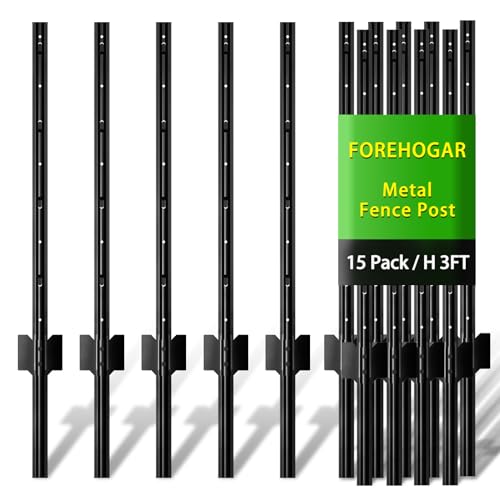
Package Including: 15 pcs of 3 feet fence post, black color, light duty. These metal posts for fence are made of rugged steel 14 Gauge thickness, which are sturdy with U-shaped design and durable.

Pack contains 5 pcs 7 feet long fence U post stakes with 1.5 foot under the ground, great for 5ft and 6ft high welded wire fencing, chicken wire, electric fence wire, poultry netting, hardware cloth, snow fence and other utility fence to build a temporary enclosure to keep animals in or out of certain areas