

Choosing between cracked and whole corn can impact your operation’s efficiency and costs.
Cracked corn offers better starch digestibility, but whole kernels often save money and handle storage better.
The best choice depends on your specific setup and priorities.
Keep reading to see which option might work best for you.
Why Cracked Corn Digestibility Matters More Than You Think
Cracking corn significantly boosts its digestibility by exposing the starch-protein matrix to microbial and enzyme activity. This exposure enhances total tract starch digestion, with studies showing cracked corn reaching about 92.4% starch digestibility compared to 89.5% for whole kernels. The difference may seem small but impacts energy utilization and feed efficiency substantially, since undigested starch is essentially wasted. Additionally, cracking improves fiber digestibility by giving rumen microbes better access to the kernel’s structural components. For long-term feeding success, proper post spacing ensures the feed system remains stable and efficient. This results in more uniform nutrient breakdown, making nutrient release more complete than with whole corn. For poultry, using a trough feeder can help minimize waste when offering cracked corn to your flock. Overall, cracking ensures you get more from every kernel, meaning better performance and more efficient feed use. For those building a feeding setup, selecting a chicken run cover can protect the feed area from the elements and maintain feed quality.

Feed ground feeding birds and other backyard wildlife

PREMIUM SCRATCH FEED FOR POULTRY: A nutritious, natural blend of cracked grains; featuring vibrant USA-grown purple corn to support healthy growth, strong development, and overall wellbeing for chickens, ducks, and backyard flocks.

[WHAT'S INCLUDED]: High-quality cracked corn in a 50 pound bag. 100% edible with no debris. Perfect for chickens, turkeys, doves, cardinals, jays, quail, deer, squirrels and other backyard wildlife. Scatter on ground or fill feeders year-round
When Cracked Corn Boosts Energy and Gains in Feedlot Diets
Cracked corn enhances energy utilization without necessarily increasing daily gain, making it a valuable choice in feedlot diets. This effect is especially noticeable in high-forage rations, where cattle can increase their dry matter intake by about 7% compared to whole corn. The key advantage comes from reducing kernel size, which allows better access to starch without overprocessing the grain. Processing methods like dry rolling further improve performance, particularly early in the feeding period when energy requirements are highest. Heavier cattle on fewer days on feed fed cracked corn can reach an average daily gain of around 4.1 pounds. Even if the gain remains unchanged, cracked corn can improve gain-to-feed ratios and lower feed costs per unit of gain, making it an effective option when efficient energy release is the priority. For producers managing feedlot operations, choosing the right processing method is as crucial as selecting a quality chicken coop for poultry management. Unlike chicken coop signs that only display flock numbers, efficient energy release is a measurable performance metric in feedlot management that directly reduces costs. When assessing feed delivery systems, ensuring cattle have consistent access to fresh water is just as vital, and choosing the right water cup design can prevent dehydration and support steady intake.

Premium Wild Bird Food: Our cracked corn is a high-quality, nutritious food source for a variety of wild birds, including finches, cardinals, and nuthatches. It's also a favorite of turkeys, deer, and chickens.

Straight Grain Cracked Organic Corn

A high-energy food eaten by many birds
Can Whole Corn Match Performance in Low-Concentrate Rations?
Whole corn can nearly match the performance of rolled corn in low-concentrate rations, provided you keep roughage levels below about 20 percent of the diet. At these levels, you will see minimal differences in gain or carcass traits when managing carefully. However, nutrient variability poses a challenge; inconsistent kernel size and hardness can influence digestibility and make each batch more unpredictable. Storage considerations also play a role. Whole corn generally stores longer than cracked or rolled corn, but fluctuations in moisture can increase the risk of spoilage or reduce intake. While handling whole corn is simpler and less labor-intensive, it limits starch access—meaning the grain must be processed properly if high digestibility is the goal. Trial data suggest that at low roughage levels, whole corn can achieve feed efficiency close to that of rolled corn. Still, as roughage increases, utilization drops sharply. In essence, you can compete with processed corn in low-concentrate diets but only if your ration remains tightly controlled and grain quality stays consistent. Choosing the right chicken coop for 12 hens ensures your flock’s feed storage remains protected from moisture and spoilage.


High-Energy Bird Food for Outdoor Feeders: This 10 lb bag of whole corn is perfect bird food for outside feeders, attracting wild birds like cardinals, doves, and sparrows with a natural, energy-rich snack.

The Real Cost Breakdown: Processing vs. Handling Savings
Processing costs for cracking corn typically range from $0.03 to $0.20 per bushel, covering labor, energy, and equipment wear. These expenses are highest for smaller operations because setup and infrastructure costs are spread over fewer bushels, making it more expensive per ton. Feeding whole corn eliminates this processing cost entirely, providing a direct savings opportunity. For those building their own setup, using repurposed pallet materials can help reduce initial construction expenses. Additionally, ensuring the support structure for your feed system is built with temporary bracing techniques can prevent costly shifts during heavy use.
Handling savings can offset some of the processing expenses. Whole corn moves fewer times through grinders and conveyors, which reduces labor, equipment runtime, and electricity use by about $0.15 to $0.25 per ton in certain setups. This reduction also lessens machine wear on mills and rollers. Additionally, whole corn improves storage efficiency because it requires fewer processing steps before reaching the bin. Its lower bulk density can also decrease transportation costs per load. In high-volume systems, these savings accumulate quickly, narrowing the cost gap between whole and cracked corn more than you might expect. Building your own feed bin can further reduce handling and storage costs by eliminating commercial infrastructure expenses.

STORAGE: Plastic pet food container for birds, cats, dogs, livestock, etc.


In High-Forage Rations: Why Whole Corn Often Wins on Cost
Because forage already provides most of the ration’s bulk, whole corn is usually the cheaper option in high-forage diets. Cracking the grain adds processing costs that do not significantly increase feed efficiency or value. Market prices show a small but consistent difference: whole corn often costs around $361 per ton, while cracked corn is closer to $371 per ton. Since corn represents a smaller portion of the total ration in forage-heavy diets, this small price gap has a limited impact overall. This approach mirrors the efficiency of radiant heat panels used in chicken coops, where targeted heating reduces waste. For similar reasons, choosing the right ag lime for chicken coop can improve moisture control and floor conditions. Just as with pine shavings in a coop, whole corn offers better storage stability without the need for extra processing.
Additional advantages of whole corn include easier storage and handling. It keeps better without special conditions, reducing logistical concerns. The benefit of cracking only becomes worthwhile if corn prices rise above roughly $6 per bushel, making the extra processing worth the cost. Until then, paying for processing that offers little return makes whole corn the smarter, more economical choice for managing your herd’s feed budget.

PART OF A BACKYARD WILDLIFE OASIS. Experience the joy of nature up-close with a simple treat that attracts these important members of the wild.

[WHAT'S INCLUDED]: High-quality whole corn kernels in a 50 pound bag. 100% edible with no debris. Perfect for chickens, turkeys, doves, cardinals, jays, quail, deer, squirrels and other backyard wildlife. Scatter on ground or fill feeders year-round
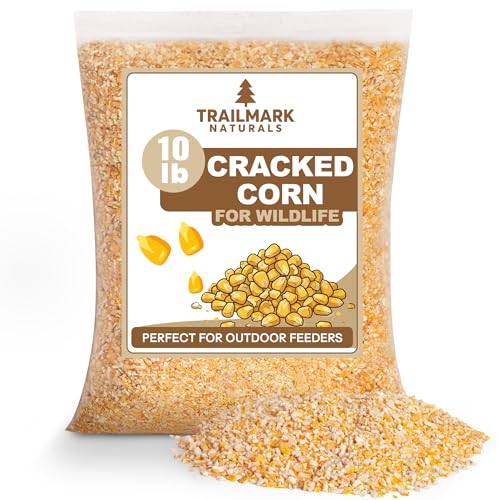
High-Energy Bird Food for Outdoor Feeders: This 10 lb bag of cracked corn is perfect bird food for outside feeders, attracting wild birds like cardinals, doves, and sparrows with a natural, energy-rich snack.
How Cattle Chewing Reduces the Need for Cracked Corn
Chewing naturally reduces the need for cracked corn because your cattle’s own mastication breaks up the kernels before rumination begins. As they eat, they fracture most of the whole corn into smaller pieces, exposing more surface area for microbial digestion in the rumen. This process damages the kernel’s pericarp—the outer shell—making starch more accessible. Unlike chicken saddles, which protect birds from feather loss during mating, a cow’s natural chewing mechanism already accomplishes the kernel breakdown you would otherwise pay a mill to do. For a similar reason, top chicken coops evaluate housing features that maximize flock health and efficiency.
In high-forage diets, cud chewing further wears down the particles, diminishing the necessity of mechanically cracked corn. Even if whole kernels appear intact in manure, the chewing process has already significantly contributed to kernel destruction. This means you are effectively paying for processing that your cattle are performing themselves through natural chewing behavior.
Why Small Performance Gains Don’t Equal Better Economics
A small performance gain from cracked corn generally does not offset the additional processing costs. Even a slight increase in average daily gain usually falls short of covering the extra expense involved. Nebraska analysis indicates that processing costs can range from $0.81 to $9.57 per ton, depending on scale and method. To break even with high-moisture corn, you need at least a 2.4% improvement in feed efficiency. Since these incremental gains are rarely that high, relying on cracked corn for marginal improvements can be more costly than beneficial. Whole corn tends to deliver comparable cost of gain without extra processing, and dry processing methods like cracking only modestly improve starch digestion. Because cattle already chew whole kernels effectively, paying more for processing doesn’t usually make economic sense. Unlike suet cakes for chickens, which provide essential fats and energy without the need for grain processing, cracked corn’s small performance boost rarely covers its extra cost. For optimal poultry health, monitoring brooder temperature is crucial for chick survival. For chickens, a properly fitted harness can ensure safe outdoor exploration without the expense of processing grain.
The Final Verdict: Choosing Whole or Cracked Corn for Your Operation
Whole corn is generally better for high-forage diets because your cattle’s rumen and chewing can handle the grain’s maturity without issues. Cracked corn, on the other hand, provides a digestibility advantage of about 5 to 10 percent, making it more suitable for high-grain finishing rations where extra digestibility can boost performance. If you feed frequently enough—several times a day—the risk of acidosis decreases, allowing you to benefit from cracked corn’s advantages without major concerns. For comparison, chickens require grit for digestion to break down whole grains similarly in their gizzards. Mature cows on supplement programs tend to do well with whole corn, which also offers cost savings for lower-intensity operations. If your focus is on maximizing performance or carcass quality, cracked corn is worth considering for its digestibility boost. Ultimately, your decision depends on balancing forage level, feeding frequency, animal class, and budget constraints. For chicken runs, selecting the right mulch can help manage moisture and waste similarly to how corn form affects cattle digestion. There’s no one-size-fits-all answer; it’s about matching the corn form to your specific system.