

Deciding between a brooder plate and a heat lamp for your chicks can feel overwhelming. Safety, cost, and ease of use are key factors, and the best choice depends on your space and budget.
Generally, a brooder plate is safer and more energy-efficient, while a heat lamp might work in colder environments or tighter budgets.
Keep reading to see how each option fits your flock.
Heat Lamp vs Brooder Plate: Which Is Safer for Your Flock?
A brooder plate is safer than a heat lamp because it eliminates the open bulb and hazardous components that pose a fire risk. Unlike heat lamps, which use exposed bulbs that can ignite bedding if knocked over or damaged, brooder plates contain the heat source within a sealed unit. This design removes dangling bulbs, unstable clamps, and high-wattage risks that are common causes of coop fires. Brooder plates also use low voltage and contact-based heating to further minimize fire potential. For those comparing quality and value in chicken coop accessories, brooder plates are often recommended for their safety features. For quail keepers, choosing the right heating method is just as important as selecting a top quail egg incubator for successful hatch rates.
Brooder plates provide more consistent temperature stability by mimicking a hen’s body heat, helping chicks stay comfortable without hot spots or drafts. They also improve moisture control by reducing condensation that often results from uneven heating with lamps, keeping bedding drier and less susceptible to mold growth.
While you still need to position the plate securely and have a ground-fault circuit interrupter (GFCI) for electrical safety, using a brooder plate entirely removes the dangers related to falling bulbs, broken glass, or shattering hazards. Because of these safety advantages, brooder plates are generally considered a safer heating option for your flock.

Designed for your flock | The 12" x 12" heating plate warms up to 20 chicks and can also be used for ducklings, turkey poults, quail, and other young poultry. A great brooder heat source for growing flocks without using a traditional heat lamp

Precise & Adjustable Warmth for Delicate Chicks: Sindarhor adjustable chick heater has three-Temperature Settings (131 F/149 F/167 F) adapt to varying climates and chick ages. The heated top panel (8.67x10.63 inches) delivers gentle, consistent heat while dual side panels minimize heat loss. NOTE: Actual ambient temperature depends on coop setup-always pair with a brooder box for newborns (Days 1-2)
Heat Lamp vs Brooder Plate: Energy Costs Compared
A brooder plate uses significantly less energy than a heat lamp—typically between 12 and 66 watts compared to a standard 250-watt lamp. This substantial difference means the lamp consumes four to twenty times more power, leading to higher electricity costs—about $15 to $20 per month, versus just a few dollars for a plate. The reason behind this gap is that brooder plates deliver contact-style radiant heat directly to your chicks, avoiding energy waste by not heating the surrounding air. As a result, they are about 85% to 90% more energy-efficient than heat lamps. Although brooder plates have a higher upfront price, usually between $40 and $140, they quickly recoup the investment through lower operating costs within the first year. Over multiple brooding cycles, the savings on energy make the plate the more economical choice. For comparison, a chicken coop fan uses even less energy and focuses on airflow rather than heat, which further highlights the efficiency advantages of targeted equipment. Similarly, diatomaceous earth can eliminate mites through a mechanical action that dehydrates them, avoiding the need for chemical treatments. For additional pest prevention, hardware cloth with openings smaller than 1/2 inch can stop mice from entering your coop.

Safe & Economical: Radiant brooder heat plate is ideal for up to 20 newly hatched chicks or 12 older chicks; At 12 watts, chicken heater offers energy savings for continuous brooding over several weeks compared to conventional heating lamps

Exactly Like a Mother Hen: The brooder heater plate provides a warm and comfortable place for newborn baby chick to get enough warmth and safety like from mother hens. 12”X16” chick heat plate can warm up to 40 chicks comfortably and freely.
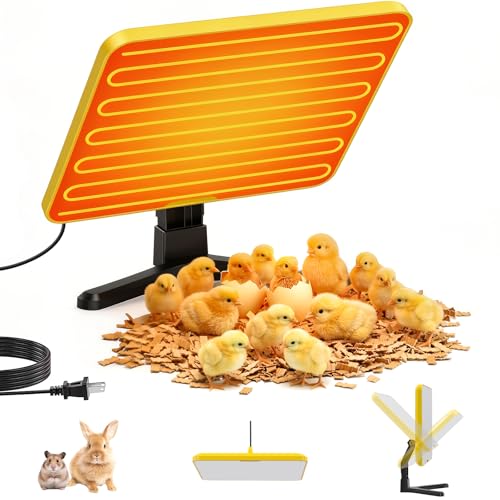
PRECISION TEMP CONTROL & SMART SENSOR: Say goodbye to overheating risks. Our brooder plate features a built-in smart sensor and a digital display, allowing you to set temperatures from 50°F to 158°F (10-70°C). Our chick brooder automatically starts heating when the temperature drops 1°C below your set point and stops when reached, ensuring a constant, cozy environment for your flock without constant monitoring.
Do Chicks Prefer a Brooder Plate or Heat Lamp?
Chicks generally prefer a brooder plate over a heat lamp because it provides a secure, sheltered space that mimics a hen’s body, offering a natural feeling of safety. They tend to settle quietly under the plate, tucking into this dark, cozy hideaway. This behavior aligns with their natural instinct to self-regulate their temperature—moving out when they’re warm enough and returning when chilled. Using top brooder thermometers ensures the plate’s surface temperature remains accurate for healthy chick development. Building a DIY feed bin can further reduce brooding costs by allowing you to store feed efficiently.
In contrast, a heat lamp produces broad, overhead warmth that encourages more scattered movement behaviors, as it lacks a specific hiding spot. Chicks under a heat lamp often stay spread out, seeking their own comfort zones within the heated area. When shipped or stressed, chicks may initially prefer the broader, ambient warmth of a heat lamp to help them find feed and water more easily.
From a safety perspective, brooder plates reduce stress and fire risk, making them a calmer environment that chicks naturally favor. While a heat lamp can be useful for quickly warming stressed chicks, many growers find that their chicks prefer the cozy security of a brooder plate once they settle into the brooding environment. Building a mobile chicken coop can be a cost-effective way to integrate brooding setups into your backyard flock management.
Heat Lamp vs Brooder Plate: Setup and Space Requirements
A brooder plate requires a low, flat setup directly on the floor with an open enclosure, while a heat lamp needs to be hung vertically about 12 to 18 inches above the bedding, with ample clearance to prevent fire hazards. For space efficiency, the brooder plate allows you to position bedding flat underneath, giving chicks a comfortable area to huddle and move freely at floor level. In contrast, the heat lamp necessitates a sturdy overhead support to hang the bulb, with space around it kept clear of bedding, feeders, and waterers to ensure safety and proper heat distribution. The heat lamp’s hanging height can be adjusted to regulate temperature, while the brooder plate’s temperature control depends on chicks’ natural movement—allowing them to self-regulate by moving closer or farther away. Additionally, for broader pest management in the coop, diatomaceous earth effectively kills mites, lice, and other external parasites that can affect your flock. A brooder plate mimics the natural warmth of a mother hen, which encourages chicks to self-regulate their body temperature instinctively. Building a DIY heat lamp stand can further reduce costs and allow for custom height adjustments.
In terms of expanding your setup, a brooder plate is more straightforward, requiring minimal extra space as chicks grow, since they remain on the floor. For a heat lamp, you’ll need to increase overhead clearance and possibly move or adjust the lamp as your flock gets larger. Both setups demand sufficient space, but the brooder plate is generally more space-efficient at the floor level. Remember, a brooder plate provides a consistent, accessible heat source at chicks’ level, while the heat lamp’s effectiveness hinges on correct hanging height and space management.

【Adjustable Height】:This reptile lamp stand is equipped with four connecting rods, which can freely adjust six different heights from 17.5inchs to 74.3inchs,so as to adapt to different sizes of reptile cage. Through this heat lamp stand for reptiles, you can hang the lamp fixture at different heights to provide an ideal lighting and temperature environment for your pet,such as snakes,chickens,bearded dragons, turtles,lizards,etc.
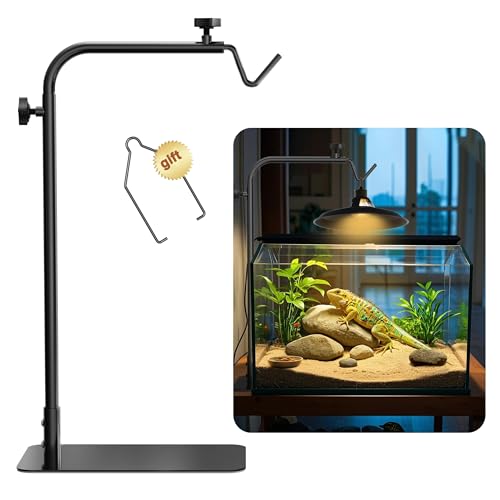
Adjustable Height & Reach: Easily adjust from 18" to 32" in height and extend the arm up to 14" for ideal light placement. Fits most standard reptile tanks and terrariums.

NEW UPGRADED MORE STABLE WIDER BASE PLATE - MECESOR heating lamp stand features a well-designed connecting rod and base, with a thickened design of the connecting rod and a reinforced and enlarged base of the stand to ensure the stability and durability of the stand. It will not tip over the bottom of the base even if you use bigger or heavier fixtures. (please keep the swing arm and base in the same direction, otherwise press the base with a heavy object).
Heat Lamp vs Brooder Plate: Upfront Cost vs. Long-Term Savings
A brooder plate is more expensive upfront but saves you money in the long run. While the initial cost ranges from $45 to $140, it uses about 85% less electricity than a heat lamp. This means your monthly energy bill drops to between $3 and $5, compared to $18 to $25 with a heat lamp. Over four to six months, the savings on electricity and bulb replacements add up to outweigh the higher initial purchase. When building your own equipment, using common flock block materials can further reduce costs and support safe, efficient chick rearing. Additionally, brooder plates are easier to install safely, reducing the risk of accidents. In the end, choosing a brooder plate can lead to lower ongoing costs and greater convenience. Unlike a heat lamp, a brooder plate mimics the natural warmth of a mother hen, which is a key feature in a chicken run for raising chicks. For even greater savings, you can apply DIY construction techniques from similar equipment guides to build a custom brooder plate enclosure.

Energy-Efficient Heating Solution: Unlike traditional heat lamps that consume high wattage, ZenxyHoC 10" x 10" chick brooder plate operates at a lower wattage, significantly reducing energy costs. It provides gentle, consistent warmth while saving you money on electricity—perfect for extended use during the brooding period.

[Note] Our coop heater is designed for localized heating and may not be ideal for large chicken coops. For optimal performance, we recommend selecting the best heating solution based on the size and layout of your coop to meet your specific needs.

SMART TEMPERATURE CONTROL - This chicken coop heater features a built-in temperature sensor that monitors and automatically adjusts the temperature in real time to consistently maintain the preset setting. Radiant heating delivers gentle, even, and steady warmth, helping create a comfortable environment for chickens, chicks, and other small animals during cold weather
When a Heat Lamp (or Brooder Plate) Wins
A heat lamp is ideal for behavioral enrichment because its open, radiant heat allows you to observe natural chick movement without barriers. Unlike a brooder plate, a lamp creates a warmer ambient zone, especially in drafty rooms or when temperatures drop below 50°F. Setting it up is straightforward—simply mount, plug in, and it’s ready to go. If you need a low-complexity, adaptable heat source that covers larger spaces or colder environments, the heat lamp is your best option. For instance, while cracked corn is a common feed, understanding whether cracked corn floats can help you manage moisture levels in your setup. When choosing between feed types, deer corn is often more durable and cost-effective for larger flocks than cracked corn.
Heat Lamp vs Brooder Plate: A Side-by-Side Verdict
Brooder plates provide a safer, more natural environment for your chicks compared to heat lamps. While heat lamps cost less upfront, they consume more electricity due to higher wattage and require continuous supervision because of fire risks from the exposed bulbs. Brooder plates, on the other hand, mimic a hen’s warmth by allowing chicks to move in and out freely, creating a more comfortable and instinctive cooling and heating cycle. Although they may not generate as broad ambient warmth as a heat lamp, brooder plates are easier to maintain, safer, and more energy-efficient over time. For most backyard flocks, they offer a simpler, safer, and more natural setup. Many poultry keepers value setups that are reviewed for quality and value, matching the practical durability of top chicken feeders with PVC pipes. For those interested in DIY projects, similar resourcefulness can be applied when building a custom oyster shell using affordable materials and simple assembly steps.
Which One Should You Buy? A Quick Recommendation
A brooder plate is generally the better choice for most backyard keepers. It features an enclosed heating element that significantly improves safety by reducing fire risks and preventing chick burns. This design is especially important if you’re working indoors or in an environment with flammable materials. Additionally, brooder plates are more cost-efficient because they use less power than traditional heat lamps, saving you money over time. The chicks also behave more naturally, moving under or away from the plate as they regulate their temperature needs, which promotes healthier development.
Opt for a heat lamp only if your budget is tight initially and you are prepared to supervise constantly. Heat lamps tend to be cheaper upfront but require frequent height adjustments and secure mounting to prevent fire hazards. They are more prone to accidents if not managed carefully. For indoor setups or environments with flammable materials, a brooder plate remains the safer, more reliable option. Consider your experience level and willingness to monitor equipment closely before choosing a heat lamp over a brooder plate.
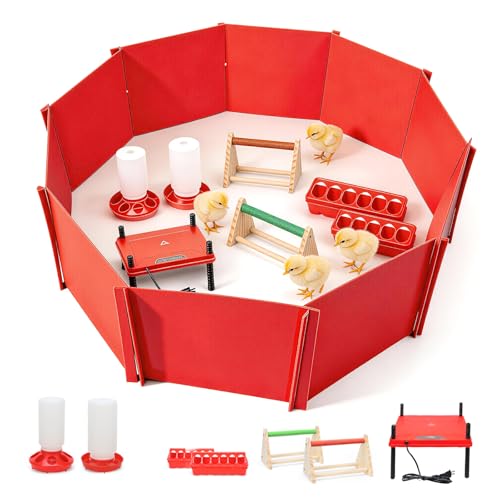
All-in-One Chick Brooder Kit:No more piecing things together!This baby chicken cage includes:a foldable octagonal brooding pen,a chicken feeder and waterer set,2 wooden chick perch,and a chicken heat plate.The moisture-resistant PVC pen keeps out wind,prevents escapes,and protects against predators,making it ideal for chicks,ducklings,quails,and more.From day one at home to the sixth week when they move to the outdoor coop,this all-in-one set covers all your brooding needs
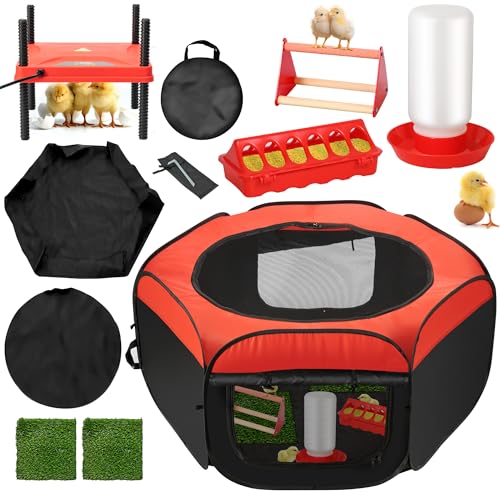
【Comprehensive Chick Starter Kit】Start raising baby chicks easily with this all-in-one brooder box kit. The set includes 1 pop up chick pen, 1 adjustable brooder heater plate, 1 chicken waterer, 1 chicken feeder, 1 chick perch, 2 cozy nesting pad,1 top cover,1 bottom pad,1 storage bag,3 peg. Whether you’re new to poultry or experienced, this kit keeps your chicks warm, fed, and safe from day one—no extra purchases needed, just more time to enjoy watching them grow.
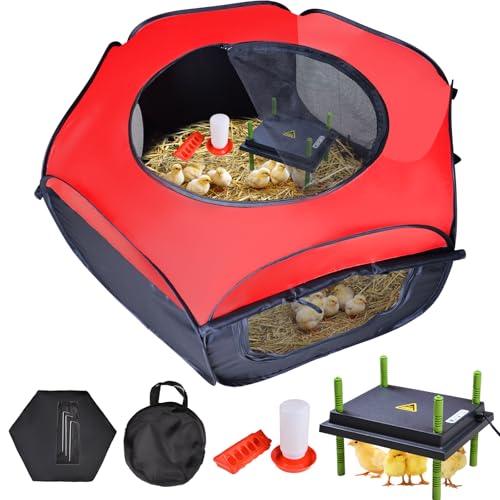
ALL-IN-ONE BROODER SET: Our brooder box kit includes verything you need to raising chicks: 1* chick brooder pen; 1*adjustable heating plate; 1*chicken feeder, 1*chicken waterer; 1*pad; 1* storage bag; 3*stakes with high-quality chicken supplies, perfect for poultry feeders. Get ready for a smooth and joyful chick-raising journey!